The Mess That Created Obama

I am prevelant on Facebook, which proves I really have no life. Actually I am very active in other things. One of those things is studying the Constitution of the United States, Bill of Rights and the true history of the United States. I mention this only because these two things have recently connected.

While purusing Facebook, I cam across this graphic.

The real job before us is not cleaning up the mess Obama created. The real one is cleaning the mess that created Obama.
Truer words were never spoken and, quite frankly, I can say the same about Trump. Only time will tell about the Trump legacy, but he would not have been my first choice. He was the only choice of the choices given, however. Yes, I voted for him and would do the same under similar circumstances.

The mess that created Obama is voter fraud. The fraud was prevelant, clearly evidenced and in your face. That is because the Republicans got into a court battle and promised not to say anything about voter fraud because they were being meanies. So I shall pinpoint the problems that caused this “mess.” In this article I will cover political labels that may hurt your feelings.

The main problem is that almost everyone allows others to think for them. They do not catch on when even Fox news is laughing in their face.

LABELS

When the term “Deplorables” was recently used against Trump supporters, they responded in an amazingly quick and devious manner. They took on the new name with pride and waved it like a flag. Even to the point of attempting to get a new U.S. Navy ship named “The Deplorables.” Unlike the progressives when called snowflakes.

I thought it interesting because the “liberals,” as you call them, are not liberal at all. They have stuck it to you with that label since the 1960s. The left-wing Wikipedia actually makes a distinction between the so-called liberalism of today with what they call “Classic liberalism.” The difference?

Classic liberals are those who believe in freedom. The free market economy. Natural rights. The left-wing Wikipedia uses the term “civil rights” instead of natural rights. They do not even want you to have that term in your lexicon because natural rights are those that the God of the Holy Bible gave you. What you might call instinct. For example you know you have the right to kill someone who is trying to kill you. In fact the “classic liberal” John Locke calls this war. War is just not for the elites to play. John Locke goes so far as to say that if a person comes on your property with the intent to do you harm, he has committed an act of war. An act of war which you may prosecute to its logical conclusion; whether that be a peace treaty or the elimination of your enemy. The point being that you have the natural right to choose your own destiny.

The caveat, of course, is that you cannot interfere with the rights of another in their pursuits, so long as those pursuits are legal. You can build a three-story house even if that house blocks your neighbors view of Mount Shasta. You CANNOT, however, dump toxic chemicals and waste in a waterway which runs through the property of others who might use that water, nor can you dam it up to prevent the flow.

The so-called “liberals” of today are properly called “progressives.” That is the term which Theodore Roosevelt, Woodrow Wilson and Franklin Delano Roosevelt used to describe their methods of circumventing the Constitution of the United States of America.

ARE YOU WAVING THE RED FLAG?

The same system of labels applies during every election. The Republicans eagerly await the posting of red colored States across the map without even realizing what they are doing. They wave red flags and post on sites called “Redstate” and wear red shirts when they should ONLY wear a red shirt on Friday for Remember Everyone Deployed (RED) Friday.

Does anyone remember what a red flag represents? There are two States in the world with red flags. Communist Russia and Communist China. Even the word Communist is incorrect for these States because they do not practice Communism as outlined by Friedrich Engels. You might not know that name, but he did most of the work accredited to Karl Marx. That’s okay though. Engels was a good communist and let Marx take the credit. What current communist governments should be called are tyrannical. That is the term used by the so-called founding fathers.

What the left-wing media has done is to get well-meaning Republicans to cheer the spread of Communism across the United States. And to cheer their own demise. Remember the old phrase, “Better dead than red?”

If we were to actually have a truth in labeling law, why would the red States not represent the Democrats since they represent tyranny? Why are they given the color of the “true blue” American? And if FOX news is the “conservative” alternative, why are they doing the exact same thing?


I am militia. And so, probably, are you.

survivor

A well regulated Militia, being necessary to the security of a free State, the right of the people to keep and bear Arms, shall not be infringed.

Second Amendment of the Bill of Rights, U.S. Archives

There is something so far-fetched and so extravagant in the idea of danger to liberty from the militia, that one is at a loss whether to treat it with gravity or with raillery; whether to consider it as a mere trial of skill, like the paradoxes of rhetoricians; as a disingenuous artifice to instil prejudices at any price; or as the serious offspring of political fanaticism. Where in the name of common-sense, are our fears to end if we may not trust our sons, our brothers, our neighbors, our fellow-citizens? What shadow of danger can there be from men who are daily mingling with the rest of their countrymen and who participate with them in the same feelings, sentiments, habits and interests? What reasonable cause of apprehension can be inferred from a power in the Union to prescribe regulations for the militia, and to command its services when necessary, while the particular States are to have the SOLE AND EXCLUSIVE APPOINTMENT OF THE OFFICERS?

Alexander Hamilton, Federalist Paper No. 29


I will start off this article with a quick discussion of the numeric importance of the Bill of Rights. Some have in mind that the Second Amendment, as we know it today, is placed at Number Two for a reason. Actually it is not. None of the Bill of Rights is more important that any other. The Second Amendment started out as Number 4 because there were actually twelve proposed amendments originally intended to make up the Bill of Rights. The first two were cut.
11038388_365294277007420_3140820287011463719_n
I have heard from various organizations and people who have disparaged the militia. This is actually not, necessarily, their fault. It is the fault of the media and your own government. The problem is that these people do not check the facts. What concerns me is that groups that should know better want to somehow distance themselves from the fact that they are militias.

The picture of the militia that the Department of Fatherland Security and the Southern Enriched-by-taxpayer-dollar Law Center paint of the militia is patently false. I would like to say that they misunderstand the concept of the militia or even that they truly believe that old line about our military taking care of us. I know better, however. Their whole plan is to scare you into thinking that they are somehow concerned for your safety.

The fact is that I am militia and have no choice. More than likely, so are you.

I am not going to offer just my own opinion on the matter. I will source information that you can look up and find on the Internet. Many from government sources. You will see that the laws concerning the subject are rather convoluted and that is by design. I hope to straighten everything out with the words of the so-called founding fathers. After all that is what Justice Sonya Sotomayor advised.

militia-01The one thing you should keep in mind is that the militia is not a concept developed by Americans. It goes way back. It was brought to America, however, by the first settlers of the Virginia colony in 1607. It stayed with us throughout the development of the Thirteen Colonies until it was used to throw off the perceived chains of tyranny by the British Crown.

It is a fact that the militia actually reacted when Britain sent troops to round up the guns of the Massachusetts militia. While Congress debated independence in 1775, the War of Independence had already begun on the battlefields of Lexington and Concord.

In his General Orders of July 2, 1776, General George Washington wrote:

The time is now near at hand which must probably determine, whether Americans are to be, Freemen, or Slaves; whether they are to have any property they can call their own; whether their Houses, and Farms, are to be pillaged and destroyed, and they consigned to a State of Wretchedness from which no human efforts will probably deliver them. The fate of unborn Millions will now depend, under God, on the Courage and Conduct of this army—Our cruel and unrelenting Enemy leaves us no choice but a brave resistance, or the most abject submission; this is all we can expect—We have therefore to resolve to conquer or die: Our own Country’s Honor, all call upon us for a vigorous and manly exertion, and if we now shamefully fail, we shall become infamous to the whole world—Let us therefore rely upon the goodness of the Cause, and the aid of the supreme Being, in whose hands Victory is, to animate and encourage us to great and noble Actions—The Eyes of all our Countrymen are now upon us, and we shall have their blessings, and praises, if happily we are the instruments of saving them from the Tyranny meditated against them. Let us therefore animate and encourage each other, and shew the whole world, that a Freeman contending for Liberty on his own ground is superior to any slavish mercenary on earth.

The “Colonial Army” was immediately disbanded after the war. In 1782, Benjamin Franklin published Information to Those Who Would Remove to America. In this he wrote:

These Ideas prevailing more or less in all the United States, it cannot be worth any Man’s while, who has a means of Living at home, to expatriate himself, in hopes of obtaining a profitable civil Office in America; and, as to military Offices, they are at an End with the War, the Armies being disbanded. Much less is it adviseable for a Person to go thither, who has no other Quality to recommend him but his Birth. In Europe it has indeed its Value; but it is a Commodity that cannot be carried to a worse Market than that of America, where people do not inquire concerning a Stranger, What is he? but, What can he do? If he has any useful Art, he is welcome; and if he exercises it, and behaves well, he will be respected by all that know him; but a mere Man of Quality, who, on that Account, wants to live upon the Public, by some Office or Salary, will be despis’d and disregarded.

Until 2008 anyway.

The War of 1812 up to, and including, the Civil War was fought by militias.

Now there was a core of officers who studied tactics and wars at West Point. The idea was to have a core of knowledgeable officers to take command of the militias in the event of a war until others could be called up and trained as regular army.
250george-washington-1
The concept of a standing army, repugnant to the likes of George Washington—the army that we have today—came about after the Civil War when the Representatives and the Senators of the North wanted to punish the South. That led to the Posse Comitatus Act of 1878. I will not delve into that act in this article. Nor will I dwell on whether that standing army was, or is, a good or bad idea. I suggest that you open your eyes to see how they have been misused to make up your own mind. The point is that until the Civil War, we had no standing army.

Keep in mind, also, that I am referring to the Constitutional militia. The Constitutional militia is to defend the borders of the State and assist other States as necessary and able. It is also to ensure that the national and State government obey and protect the Constitutional form of government and the Bill of Rights and ALL natural rights of the citizens. Yes, the government employees are supposed to be scared to violate their oath of office. Any group that advocates killing police officer or suppressing the rights of LEGAL fellow citizens are not a militia. The Klu Klux Klan, La Raza and the Black Panthers are NOT examples of militias.

THE LAWS
300alex-fed29-1
Article I, Section 8, Clause 11 – 16 give Congress the authority to:

  • To declare War, grant Letters of Marque and Reprisal, and make Rules concerning Captures on Land and Water;
  • To raise and support Armies, but no Appropriation of Money to that Use shall be for a longer Term than two Years;
  • To provide and maintain a Navy;
  • To make Rules for the Government and Regulation of the land and naval Forces;
  • To provide for calling forth the Militia to execute the Laws of the Union, suppress Insurrections and repel Invasions;
  • To provide for organizing, arming, and disciplining, the Militia, and for governing such Part of them as may be employed in the Service of the United States, reserving to the States respectively, the Appointment of the Officers, and the Authority of training the Militia according to the discipline prescribed by Congress;

These are their “War powers.” Some take Clause 12 to mean that the government could not maintain an army for more than two-years. That clause, however, only means that appropriations for the military must be made every two-years. This is where we get the National Defense Authorization Act, or NDAA.

What is important are Clauses 15 and 16. Clause 15 specifies what the militia is for. (1) To execute the Laws of the Union (the Constitutional laws), (2) to suppress insurrections and (3) to repel invasions. None of these actions are related to anything in a foreign country. They are SPECIFICALLY related to here in the good old U.S. of A. This will be important later.

Clause 16 of Article 8 requires Congress to organize, arm and discipline the militia. Discipline, in this case, means to train people to obey a certain set of rules and punish them only as necessary to accomplish that goal. As you can clearly see they are supposed to ARM the militia, not disarm it. I will show presently that means that all weapons in the arsenal of the standing army are supposed to be made available to the militia, in accordance with the Second Amendment.

You might note that Clause 13 establishes absolutely no restrictions on the Navy and, by extension, the Marines. That is because they are supposed to be used over there. Not here. The Navy was a means of protecting our shipping lanes from pirates and other marauders. Interestingly the Title of the United States Code was repealed when they merged with other military units to become the new world order police.

Article I, Section 10 Clause 3

  • No State shall, without the Consent of Congress, … keep Troops, or Ships of War in time of Peace, … or engage in War, unless actually invaded, or in such imminent Danger as will not admit of delay.

Article IV, Section. 4.

  • The United States shall guarantee to every State in this Union a Republican Form of Government, and shall protect each of them against Invasion; and on Application of the Legislature, or of the Executive (when the Legislature cannot be convened), against domestic Violence.

I refer to the above provisions of the Constitution for a couple of reasons. Here’s a hint. It does tie in with the Tenth Amendment which ties in with the Ninth. If you cannot figure it out, I will connect the dots.

Notice the use of the term “Troops” instead of militia. That is because they are referring to a standing army; not the militia which are the citizens of the State. The national government has graciously granted the States permission to have a standing army when they stole the militias and formed a branch of the United States Army called the National Guard.

Notice that the Article IV, Section. 4. of the Constitution requires the United States to protect every State in this Union from invasion. The national government will not tell us how many Muslim terrorists, M-13 and other gang members and members of the drug cartel they armed have entered the United States through the porous southern border. I suppose they have not had time to tally up the number of lollipops that they gave out.

You might also note that Article IV requires the government to guarantee each State a “Republican” form of government. That has nothing to do with the Republican party of today. It does make Statewide initiatives and referendums unconstitutional, however. But not recalls. They may be Constitutional on the County and City level.

Article I, Section 10, however, clearly gives the States the right to go to war if the national government does not do its job to repel invasion. No one can question we have been invaded by threatening, armed force in Arizona time-and-again. Since the “government,” as you call them, is not doing the job, We the People can. That is because the militia, the people of the State, is necessary to the security of a FREE State.

CONSTITUTION OF THE GREAT STATE OF ARIZONA

The laws that I now cite concern the militia on the national level on down to the Great State of Arizona. I may go into a few other States if I can find their appropriate statutes.

ARTICLE 2

Section 26. Bearing arms
Section 26. The right of the individual citizen to bear arms in defense of himself or the state shall not be impaired, but nothing in this section shall be construed as authorizing individuals or corporations to organize, maintain, or employ an armed body of men.

ARTICLE 16 MILITIA

Section 1. The militia of the state of Arizona shall consist of all capable citizens of the state between the ages of eighteen and forty-five years, and of those between said ages who shall have declared their intention to become citizens of the United States, residing therein, subject to such exemptions as now exist, or as may hereafter be created, by the laws of the United States or of this state.

Section 2. The organized militia shall be designated “The National Guard of Arizona,” and shall consist of such organized military bodies as now exist under the laws of the territory of Arizona or as may hereafter be authorized by law.

Section 3. The organization, equipment, and discipline of the national guard shall conform as nearly as shall be practicable to the regulations for the government of the armies of the United States.

According to Arizona, the “militia” of the the state of Arizona shall consist of all capable citizens of the state from 18 to 45 including those who have declared their intention to become citizens of the United States. That includes you, ladies. Section 2 declares that The National Guard is the “organized” militia.

The term National Guard was coming into vogue about the time that the Constitution of the State of Arizona was being written. The original “Dick Act” was written in 1903, sometimes called The Efficiency in Militia Act of 1903. I mistakenly reported once that Elihu Root wrote the bill, but he revised it organizing the militia into two groups. I will not go into detail, but the revision did not allow militia (still called militia at the time) to be used overseas. That did not occur until 1916. The second that provision went into effect, they exceeded the duties of the militia outlined in the Constitution and they were no longer militia.

Some say that the National Guard are the militia when not federalized, but are not the militia when federalized. By federalized I mean called into service of the national government. I cannot directly find a quote from the founders on this, but I am sure that the founders would be saying Huh?. The Constitution allows them to be, so-called, federalized, but ONLY for the purposes specified in the Constitution. None of which are overseas concerns to us.

Section 3 might be okay for the national guard since they are nothing more than a branch of the United States standing army. The founders, however, were against military laws (they called them marshal laws), such as the Uniformed Code of Military Justice, unless in actual war for the militia. There has to be some law, of course, such as training requirements, who can give training, when you MUST train, calling the militia to active duty and so-forth. Civil penalties were okay and regulated by each State.

Ah, ha! say you. You added Section 26 of the Constitution of Arizona which clearly states, ‘but nothing in this section shall be construed as authorizing individuals or corporations to organize, maintain, or employ an armed body of men. That is correct. The Black Panthers are unconstitutional according to the Arizona State Constitution and illegal according to Title 26. But they are NOT militia. Those are insurrectionists and are to be put down by the militia.

Once again, the militia are the legal citizens of the State—in this case Arizona—and those who have actually applied for legal status from ages 18 to 45. No law against volunteers outside of that age range. The sole duty of the militia is to ensure the peace of their neighborhoods and towns and to ensure NO ONE infringes on the natural rights of they, their families or their neighbors.

For more information, read Federalist Paper No. 29 in particular. You might need to read No. 24 to No. 28 to get the whole picture. This is the paper I told you about that states that we should be armed and trained equal to the standing army.

The Arizona Revised Statute

The A.R.S. has a slurry of convoluted laws in Title 26 concerning the militia and the National Guard. The basic idea, however, is that the governor can call up the “unorganized militia” at any time and place them under the command of the command of the National Guard.

You can find Title 26 here.

ISN’T THE MILITIA GOING TO TAKE OVER THE GOVERNMENT?

I should certainly hope not. I would fight against any entity that tries to usurp the Constitution and take over the government. That is simply because I know what the government is.

I am the government.

You must understand what the government is. For example what you call the “Federal Government” is NOT the federal government. The federal government consists of employees selected through fraudulent elections to represent our needs and protect our rights. The federal government consists of the national government centered in Washington D.C., the State legislatures, the county governments and the city governments. Ultimately the federal government is the people; you and me.

For a good lesson in Federalism one might turn to Bond v. United States (PDF). Start on Page 11 of the PDF file where the II is. No, that is not the page number. That is the Roman numeral 2. You will have to delve into other resources to fully understand, but that is a good start.

You might also be interested in reading about the Tenth Amendment.

ISN’T THE NATIONAL GUARD THE MILITIA?

No. Not by definition. Particularly not by Constitutional definition. The duties of the militia are clearly outlined in the Constitution of the United States of America. Remember in previous discussion we discussed the purpose of the militia. All of their duties are confined to actions within the borders of the United States. If any law or regulation allows them to be used outside of those confines, they become a division of the standing army.

This came to a head in 1990 in the Supreme Court case of Perpich v. Dod in which the Supreme Court wrote that National Guard members take an oath to the State and the national governments. This, of course, causes an immediate skism.

They do note that Congress has allowed States to maintain their own troops. Title 32 United States Code Section 109 is that provision. Arizona tried to develop a State defense force a few years ago with H.R. 1083. It was killed in committee by Andy Biggs and the behest of Jan Brewer because it probably would have passed.

The bill, admittedly, was so flawed that it should have been re-written for the next session. The biggest flaw was that they were trying to make a branch of the National Guard; not a State defense force. It should have rated its own Chapter in Title 26.

SUMMARY

Let me start off by saying that nothing in this article is meant to disparage the National Guard nor the military. I was a member of the Navy and served temporary time in the standing army. National Guard units refused to assist the police in disarming citizens in New Orleans after Katrina; a completely unconstitutional act. That is EXACTLY what the militia is for. To maintain peace and stability in an emergency situation.

I could go into a lot more detail and reason on this subject, but if you made it this far there are a few possibilities.

(1) You have no idea about the subject and found this article through a search engine. If so, I urge you to read all views on the matter and think for yourself. Do not use MSN, CNN, the Southern Enriched-by-Taxpyer-Dollar Law Center or the like. If you do, just remember they are of the opposite opinion of me. Seek out legal articles by scholars. I do.

(2) You are a legal scholar or law student. Even better. Prove me wrong. Take your best shot (metaphorically speaking, please). The Constitution is rather clear on the subject. Start there. You have better access to the law books and can see how the laws developed. Just ask yourself if the laws actually match the intent of the Constitution.

(3) You are Gene Simmons and you were really, really bored.

The militia is already spelled out in the Arizona Constitution and the Arizona Revised Statute. It already exists and you are probably a part. It is probably the same in most common sense States.

But I live in California and the National Guard is the militia in my State. So there. Well, my friend, if you live in Kawliforna, you are misguided, more than likely, by the Supremacy Clause notion. What that means to you is that the Constitution of the United States of America and the laws take precedence. Therefore under Title 10, Chapter 13, Section 311 you are in the militia if you are from age 17 to 45. So there.

If you were prior military, the Title reads:

…except as provided in section 313 of title 32, under 45 years of age…

Title 32 U.S.C., Section 313 provides:

…or under 64 years of age and a former member of the Regular Army, Regular Navy, Regular Air Force, or Regular Marine Corps.

So the question remains, does one need government permission to form a militia. No. The militia is already formed and YOU are the government. The government employees are required by the Constitution of the United States of America to ensure that you are armed and trained equal to the standing army (Refer to Federalist Paper No. 29).

Let us examine a few instances. In 1946, corrupt politicians tried to usurp the election process in Athens, Tennessee. Veterans, returning home from the war, were trying to get elected to root out the corruption. When the politicians tried to steal the election, the veterans formed into a militia to ensure fair results. The event was dramatized in the 1992 television movie An American Story.

In recent times Ferguson, Missouri and Baltimore, Maryland are big in the news. In Baltimore the “civil government” told police to stand down because they were only destroying property. What they did not show is African-Americans and other races standing together to protect property and somewhat confine the rioting. For example a group of armed African-American men stood together to protect the store they worked at and provided their livelihood. Guess what. They are militia. Yes, the militia—the citizens—can even defy their so-called government and the law to protect their rights, their property and the rights and property of others.

That does NOT mean arm everyone in the State. Obviously there are those who should not have arms and they are excluded by the Arizona Revised Statue. There are exemptions for certain elected officials. And there are criminals.

Even of those that CAN be armed, it does not follow that they HAVE to be armed. There are roles for clerks, hospital staff, cooks and so-on. They can choose to, and should have, firearms training, but it does not mean they necessarily have to lug it around.

The militia is not just there for war. They are also there to fight forest fires. Provide medical relief and comfort during an emergency.

And, yes, the States can and should train them to defend their entire border from drug traffickers and illegals.


The Romans XIII lie

NOTE: This article references PDF files which require Adobe PDF reader. If you do not want to read them online or for some other reason prefer to download the file, click the right button on your mouse and select Save Link As. You can, of course, print the files if you prefer.


Romans-13-300I find it interesting when the government gets religion. More accurately, I find it suspicious. Particularly when they speak under the banner of separation of Church and State.

I recently listened to a program on a web site called Love Guns and Freedom. Gianaluca Zanna Pastor Walt Mansfield from Ohio who exposed FEMAs use of pastors to perpetuating the Romans 13 lie.

I have run into this debate before. I debated this with a friend on a web site whom I am sure believes he is a good and devout Christian. He is absolutely convinced that the perverse interpretation delivered from the pulpit of FEMA (Which obviously violates their so-called separation of Church and State) is true and correct. That we should allow the absolute rule of His Majesty Obama and his court. By the way this is the same FEMA which violated the Constitution during the Katrina crisis and labeled the forefathers as terrorists.

I shall make a few observations first.

It is interesting that the court and his adoring serfs liken Obama to the mythical character of Robin Hood. Particularly since Robin Hood was an outlaw. What does that make Obama?

Another problem with this characterization is what Robin Hood stood for. Robin Hood lived in a era, so the myth goes, where the Normans were inflicting unjust rule over the Saxons with a leader who had usurped the power he was intrusted with. Prince John, the usurper, continually wrote “executive orders” which were in conflict with the the rule of law set forth by the rightful King of England—King Richard. King Richard was, at the time, off fighting against terrorists in the Middle East.

Indeed, the characterization of the Prince John is more apt to describe Obama.

The second observation is that those who call themselves the foederal (original spelling) government are being hypocritical. They use pieces of scripture to build their religion. This is not unusual since most “religions” do the same thing. They will feed you the lines of Jesus taking care of the poor. Yet, they ignore the scripture, “For even when we were with you, this we commanded you, that if any would not work, neither should he eat.” (2 Thessalonians 3:10) Taking care of the poor actually goes back to the Old Testament. Taking care of widows and orphans and those who cannot take care of themselves is Christian teaching. James 1:27 tells us, “Pure religion and undefiled before God and the Father is this, To visit the fatherless and widows in their affliction, and to keep himself unspotted from the world.” In the Old Testament, when harvesting crops the farmers were ordered to leave a certain amount of food laying for the poor to gather. The onus was on the people to do this, not the employees of the people.

The third, and most interesting, observation in my mind is the fact that before the American War for Independence, the clergy was used to inspire the justification of their cause. The clergy was among the most educated in that era. Their opinions were highly regarded. When the war started they became the first Chaplains in the service of the United States actually participating in the battles.

One of the most wasteful uses of tax dollars is supporting those “Non-Profits” that support government positions. These “Pastors” who spew the Romans 13 nonsense actually get paid by the national government, according to some accounts.

Patrick Henry warned of this during the debates in Virginia to discuss the ratification of the Constitution. On June 9, 1788 he warned:

Congress, by the power of taxation, by that of raising an army, and by their control over the militia, have the sword in one hand, and the purse in the other. Shall we be safe without either? Congress have an unlimited power over both: they are entirely given up by us. Let him candidly tell me, where and when did freedom exist, when the sword and purse were given up from the people?

ROMANS XIII

The text in question is Romans, Chapter 13 beginning with Verse 1.

Let every soul be subject unto the higher powers. For there is no power but of God: the powers that be are ordained of God. 2 Whosoever therefore resisteth the power, resisteth the ordinance of God: and they that resist shall receive to themselves damnation. 3 For rulers are not a terror to good works, but to the evil. Wilt thou then not be afraid of the power? do that which is good, and thou shalt have praise of the same: 4 For he is the minister of God to thee for good. But if thou do that which is evil, be afraid; for he beareth not the sword in vain: for he is the minister of God, a revenger to execute wrath upon him that doeth evil. 5 Wherefore ye must needs be subject, not only for wrath, but also for conscience sake. 6 For for this cause pay ye tribute also: for they are God’s ministers, attending continually upon this very thing. 7 Render therefore to all their dues: tribute to whom tribute is due; custom to whom custom; fear to whom fear; honour to whom honour.

Of course they completely bypass Romans 1:

21 Because that, when they knew God, they glorified him not as God, neither were thankful; but became vain in their imaginations, and their foolish heart was darkened. 22 Professing themselves to be wise, they became fools, 23 And changed the glory of the uncorruptible God into an image made like to corruptible man, and to birds, and fourfooted beasts, and creeping things. 24 Wherefore God also gave them up to uncleanness through the lusts of their own hearts, to dishonour their own bodies between themselves: 25 Who changed the truth of God into a lie, and worshipped and served the creature more than the Creator, who is blessed for ever. Amen. 26 For this cause God gave them up unto vile affections: for even their women did change the natural use into that which is against nature: 27 And likewise also the men, leaving the natural use of the woman, burned in their lust one toward another; men with men working that which is unseemly, and receiving in themselves that recompence of their error which was meet.

In 1865, Andrew W. Young wrote The Government Class Book. This book was used extensively in schools throughout the States. Young was an educator who wrote several books on the topics of civics. In Chapter III—Laws, defined.—he wrote:

Sec.7. If, as has been said, the laws of the Creator form a perfect rule of conduct for all mankind, and ought in all cases to be obeyed, then all human law ought to agree with the divine law. If a human law is contrary to the divine law, or if it requires us to disobey the commands of God, it is not binding, and should not be obeyed.

So-called Progressives love to use the words of Thomas Paine “The atheist.” Like many religious orders use pieces of scripture—including Romans 13—to make points, so too the Progressives.

This is really the crux of the matter at hand. The use of pieces of scripture rather than taking the Bible, or other work, as a whole.

Progressives like to quote Paine as attacking “Christianity” when he really attacked “Religion.” Religious orders. He wrote Common Sense in support of the American War of Independence.

Yes, that dirty person violated Romans 13! How dare he!

Progressives do not like his message to the Quakers in the Appendix to the work:

O ye partial ministers of your own acknowledged principles. If the bearing arms be sinful, the first going to war must be more so, by all the difference between wilful attack, and unavoidable defence. Wherefore, if ye really preach from conscience, and mean not to make a political hobbyhorse of your religion convince the world thereof, by proclaiming your doctrine to our enemies, for they likewise bear arms. Give us proof of your sincerity by publishing it at St. James’s, to the commanders in chief at Boston, to the Admirals and Captains who are piratically ravaging our coasts, and to all the murdering miscreants who are acting in authority under him whom ye profess to serve. Had ye the honest soul of Barclay ye would preach repentance to your king; Ye would tell the Royal Wretch his sins, and warn him of eternal ruin. Ye would not spend your partial invectives against the injured and the insulted only, but, like faithful ministers, would cry aloud and spare none. Say not that ye are persecuted, neither endeavour to make us the authors of that reproach, which, ye are bringing upon yourselves; for we testify unto all men, that we do not complain against you because ye are Quakers, but because ye pretend to be and are NOT Quakers.

Alas! it seems by the particular tendency of some part of your testimony, and other parts of your conduct, as if, all sin was reduced to, and comprehended in, the act of bearing arms, and that by the people only. Ye appear to us, to have mistaken party for conscience; because, the general tenor of your actions wants uniformity—And it is exceedingly difficult to us to give credit to many of your pretended scruples; because, we see them made by the same men, who, in the very instant that they are exclaiming against the mammon of this world, are nevertheless, hunting after it with a step as steady as Time, and an appetite as keen as Death.

The quotation which ye have made from Proverbs, in the third page of your testimony, that, “when a man’s ways please the Lord, he maketh even his enemies to be at peace with him”; is very unwisely chosen on your part; because, it amounts to a proof, that the king’s ways (whom ye are desirous of supporting) do note please the Lord, otherwise, his reign would be in peace.

The Quakers were screaming for peace. Most notably John Dickenson of Philadelphia at the First Continental Congress. The use of arms was abhorrent to them. The Quakers may have even referred to Romans 13 in their defense—though I cannot find records to prove that.

Thomas Paine was not recommending a double-barrel shotgun shot into the air.

Another person progressives love to quote (except for his stance on the ownership of firearms) is Thomas Jefferson. The seal of the United States that he designed included his personal quote:

Rebellion to tyrants is obedience to God.

jefferson-proposed-great-seal

This leads to the final argument against the Romans 13 lie.

FEDERALISM

“When government acts in excess of its lawful powers, individual liberty is at stake.”—Justice Kennedy, Supreme Court, Bond v. United States (564 U.S. __ (2011))

Most children were taught even before Communist Cores schools that the foederal government is that government which resides and does business in the District of Columbia.

The Supreme Court made one of its rare unanimous decisions concerning the concept of federalism in the case of Carol Anne Bond v. United States in 2011 (PDF; Alternate PDF with notations). It strengthened the Tenth Amendment of the Bill of Rights. More importantly, the short decision is a primer on what federalism actually is.

The important text of the brief 14 page decision written by Justice Kennedy starts at Section III on Page 8. It should be read by every student in the Great State of Arizona, if not the whole States United. It is more important to understand this concept than passing the immigration test. Most of the employees you put into office DO NOT understand this concept.

If you have children, you should download and print this decision. Read it with them and discuss it.

THE CONSTITUTION DEFINES THE GOVERNMENT

A final analysis takes a look into why rebellion against a tyrannical government—particularly in the United States—represents compliance with Romans 13.

The Constitution of the United States defines the government. It defines it very clearly in Article IV, Section 4:

The United States shall guarantee to every State in this Union a Republican Form of Government,…

This does NOT mean the “Republican Party.” This is a form of government. It is NOT Democracy. There are elements of Democracy involved. Even Thomas Jefferson conceded that pure Democracy could only be exercised on the local level, i.e. county/city level.

It also defines the responsibility of those entrusted with protecting the rights of the People under the terms of that document. Article II, Section 1; Clause 8 of the Constitution requires the President to take an oath to:

Before he enter on the Execution of his Office, he shall take the following Oath or Affirmation:—”I do solemnly swear (or affirm) that I will faithfully execute the Office of President of the United States, and will to the best of my Ability, preserve, protect and defend the Constitution of the United States.”

The “government” expanded this oath for “all others” in 5 U.S. Code §3331 specifies:

An individual, except the President, elected or appointed to an office of honor or profit in the civil service or uniformed services, shall take the following oath: “I, AB, do solemnly swear (or affirm) that I will support and defend the Constitution of the United States against all enemies, foreign and domestic; that I will bear true faith and allegiance to the same; that I take this obligation freely, without any mental reservation or purpose of evasion; and that I will well and faithfully discharge the duties of the office on which I am about to enter. So help me God.” This section does not affect other oaths required by law.

Let us make something clear, at this point. The Constitution of the United States is not just the document that bears that title. The Constitution of a country is simply the “Law of the Land.” When the Pharaoh of Egypt said, So let it be written, so let it be done, it became part of the Constitution. The Articles of Association, Declaration of Independence and Articles of Confederation are equally a part of the Constitution.

Those people we hire at election time are our employees. Their job—whether national, State or local—is defined in the Declaration of Independence.

We hold these truths to be self-evident, that all men are created equal, that they are endowed by their Creator with certain unalienable Rights, that among these are Life, Liberty and the pursuit of Happiness.–That to secure these rights, Governments are instituted among Men, deriving their just powers from the consent of the governed,…

What is the duty of the People?

That whenever any Form of Government becomes destructive of these ends, it is the Right of the People to alter or to abolish it, and to institute new Government, laying its foundation on such principles and organizing its powers in such form, as to them shall seem most likely to effect their Safety and Happiness.

Jefferson was paraphrasing the liberal writer John Locke. Liberal is the correct term. Liberal actually means a person who believes in limited government.

I urge you to view a copy of the Declaration of Independence. Look at the list of grievances outlined. Do you really believe that the Constitution of the United States was intended to turn those grievances into government bureaucracies?

In fact the example our forefathers gave to comply with Romans 13 was given on April 19, 1775 in Concord and Lexington.


My computer is pleadin’ the Fifth

Fifth Amendment case in Denver causes concerns

by Glen C. Davis

Recently, the Supreme Court ruled that GPS tracking devises violated the Constitutional Fourth Amendment guarantees because people have a reasonable right to privacy in their cars. As I understand the ruling, however, if you have OnStar® or one of the other government tracking devices already in your car, they can track you through that system.

On January 4th, the Denver Post reported on another example of the courts grappling with the Bill of Rights in the digital age. And the case is shaking up civil liberties groups.

The case involves Ramona Fricosu who was allegedly involved in a fraud scheme along with her husband. One of the items seized by the prosecutors was her laptop computer. The laptop, however, was encrypted and the prosecutor could not retrieve the contents. Fricosu refused to give the password citing her Fifth Amendment right against self-incrimination.

John Ingold of the Denver Post reported on the 24th, “In an order issued Monday, U.S. District Judge Robert Blackburn said requiring Ramona Fricosu to provide an unencrypted version of her laptop’s hard drive to prosecutors does not violate her rights against self-incrimination. Instead, Blackburn ruled that providing the unlocked laptop wouldn’t be self-incriminatory because it wouldn’t prove anything that the government doesn’t already know.”

Hanni Fakhoury, an attorney with the Electronic Frontier Foundation, still thinks the Fifth Amendment applies in this case, according to the article. The case is going to the 10th Circuit Court of Appeals.

This is actually a compelling case and one likely to make it to the Supreme Court. On the one hand, you do have a right not to provide incriminating evidence in the Fifth Amendment. That is why signing anything “under penalty of perjury” is quite frankly unconstitutional. You cannot be compelled to sign away your rights.

On the other hand, the Fourth Amendment guarantees, “The right of the people to be secure in their persons, houses, papers, and effects, against unreasonable searches and seizures shall not be violated,…” While the police today have pretty much the same power that the “Redcoats” had prior to the revolution—which was among the chief complaints of the colonists—they still must obtain a warrant from a judge. In this case, they did that and the seized computer was among the evidence for their case. Whether or not the computer and the location of the computer was specified on the warrant as is REQUIRED by the Fourth Amendment is another topic.

In this case, I would have to agree with District Judge Blackburn. Apparently the laptop was just another piece of evidence in the pieces of evidence that they already had.

Let us set another scenario, however. Let us say that a person is sitting and using a wireless laptop at a coffee shop. A police officer wanders over and the person presses a button and locks the computer. Does the officer have a “probable cause” to order the person to unlock the laptop? No. This would violate both the Fourth and Fifth Amendment. If the officer “sees” something that the person is doing and knows that it is illegal, he may then have probable cause to arrest and cause the person to unlock the computer. He already sees it and knows it is there. If the coffee shop owner, however, sees actual evidence that the person is using the computer for illegal purposes and reports it, then the police have enough for a warrant and to cause the person to unlock.

Granted, in the case of Fricosu, the prosecutors and police have not “seen” the contents so they do not “know” there is anything related to the case on the computer at all. That may be an “out” in this case. Still, I believe there is enough “probable cause” that this does not represent a violation of either the Fourth or Fifth Amendment. Does the lock on your front door, for example, give you a Fifth Amendment right to keep officers from performing their duty after they have complied with the Fourth Amendment?

One question that might come up, however, is what about online storage sites? If a person stores the data at an online site that is not listed on the search warrant, can the police access it or use it as evidence? I would think not until they obtained another warrant for the evidence. Of course, that would be served to the provider of the service, not the defendant.


Schenck v. United States: A clear and present revisit

Rather than rehash the difference in democratic principles between the founding fathers and those of the democratic party today, I would like to begin this article by referring you to my previous article on the subject. It is a long-winded way of saying that when I refer to Marxist democrats, I am referring to the democrats today rather than the Locke democrats of our history. This seems, to my mind, the best way to preface this article. Certainly I do not mean to imply that all democrats are Marxists. The article, however, explains itself.

I preface it in this fashion because I find Schenck v. United States 249 U.S. 47 (1919) an interesting First Amendment case in light of what is happening today. It is important for more than just the fact that it coined two phrases.

In this case, Oliver Wendell Holmes wrote,

“The most stringent protection of free speech would not protect a man in falsely shouting fire in a theatre and causing a panic. It does not even protect a man from an injunction against uttering words that may have all the effect of force.”

In paragraph 5 he writes further,

“The question in every case is whether the words used are used in such circumstances and are of such a nature as to create a clear and present danger that they will bring about the substantive evils that Congress has a right to prevent.”

This is the coining of the phrases, “You can’t yell fire in a crowded theater” and “clear and present danger.”

That begs the question of what is a “clear and present danger?” John McCain and 92 of his cohorts seem to feel that they have answered that question with the passage of S. 1867 and the infamous Section 1301 of the National Defense Authorization Act. Diane Feinstein even wrote an amendment to ensure that there was a provision in this section that it did not apply to American citizens. She voted on it even though her amendment failed. The gist of this, as you may have read, is that the military now has the authority to round up “dissidents” and place them in Gitmo and other foreign prisons to silence them.

Apparently our own gulags are too full of those damn pot smokers!

So what constitutes a “clear and present danger?” Is it the gal with the peace sticker on her car? Certainly a person with a pocket Constitution and a Ron Paul sticker is suspect. Are you “supporting terror” and “not supporting our troops” or aiding the enemy if you speak out against the war? I suppose that you can add me to that list because I speak out against the war precisely because I support the troops. I object to dumping a trillion dollars into a war which killed and dismembered thousands of our dedicated young people with no clear objective to achieve. It is the same process we used on our Vietnam veterans who served their country and returned to be spat upon and to be told that they are really not sick.

Even Discover Magazine used space—best served to teach us the grandeur of evolutionary science—to comment on the horrors of S. 1867. Salon is one of the few that are using the Marxists clarion call of, “It’s not that bad.” You may find the opposing view there.

What is interesting is that the case concerns Comrade Schenck—the general secretary of the Socialist Party—who was convicted on three counts of conspiracy. He was distributing pamphlets to drafted men to avoid the draft and stay out of World War I. I suppose, now, we know where the Marxist of the sixties got the idea to “burn their draft cards.”

Now those Marxists form the core of the usurped “Democratic Party” and the Southern Poverty Law Center. They are now using this “clear and present danger” theory to attack anyone who mentions the Constitution and that they have rights under the Bill of Rights. They attack anyone who speak out against the intrusion on our rights. Especially anyone who knows the truth about the Second Amendment. They have attacked the “TEA party” movement as terrorists and the Oathkeepers who do not advocate violence or that people stay out of the military or police—only that they remember their oath to the Constitution.

It seems strange that this decision seems to have come full circle. From applying these principles to those who were advocating violations of the Constitution to those who are defending it.

As these Marxist often do, they do not use quotes except those that serve their needs. They do not quote Abraham Lincoln who said, “To sin by silence when they should protest makes cowards of men.” There probably is no text book in school that quotes Thomas Jefferson who said, “No experiment can be more interesting than that we are trying, and which we trust will end in establishing the fact, that man may be governed by reason and truth. Our first objective should therefore be, to leave open to him all the avenues of truth. The most effectual hitherto found, is the freedom of the press. It is, therefore, the first shut up by those who fear the investigation of their actions.”

As the Anti-Federalist Brutus observed, “But remember, when the people once part with power, they can seldom or never resume it again but by force. Many instances can be produced in which the people have voluntarily increased the powers of their rulers; but few, if any, in which rulers have willingly abridged their authority. This is a sufficient reason to induce you to be careful, in the first instance, how you deposit the powers of government.”

Schenck v. United States 249 U.S. 47 (1919)


Happy Birthday George Washington!

For this you have every inducement of sympathy and interest. Citizens, by birth or choice, of a common country, that country has a right to concentrate your affections. The name of american, which belongs to you, in your national capacity, must always exalt the just pride of Patriotism, more than any appellation derived from local discriminations. With slight shades of difference, you have the same religion, manners, habits, and political principles. You have in a common cause fought and triumphed together; the Independence and Liberty you possess are the work of joint counsels, and joint efforts, of common dangers, sufferings, and successes.
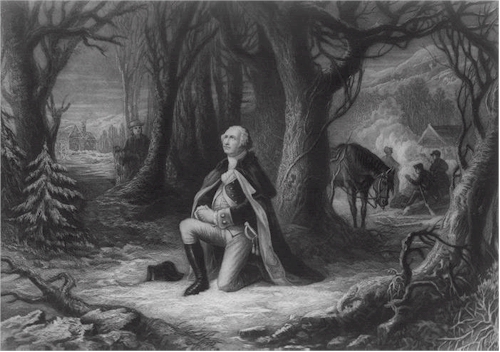
President George Washington was born 279 years ago on this day in 1732. He led the Americans to victory in the War of Independence and then served two terms as the first President of the United States. He is the only president to have received 100% of the electoral vote. He was the first and last sitting president to lead troops into battle in the Whiskey Rebellion, though no actual battle occurred.

George Washington’s Farewell Address:

FRIENDS AND FELLOW-CITIZENS:

1 The period for a new election of a citizen, to administer the executive government of the United States, being not far distant, and the time actually arrived, when your thoughts must be employed designating the person, who is to be clothed with that important trust, it appears to me proper, especially as it may conduce to a more distinct expression of the public voice, that I should now apprize you of the resolution I have formed, to decline being considered among the number of those out of whom a choice is to be made.

2 I beg you at the same time to do me the justice to be assured that this resolution has not been taken without a strict regard to all the considerations appertaining to the relation which binds a dutiful citizen to his country; and that in withdrawing the tender of service, which silence in my situation might imply, I am influenced by no diminution of zeal for your future interest, no deficiency of grateful respect for your past kindness, but am supported by a full conviction that the step is compatible with both.

3 The acceptance of, and continuance hitherto in, the office to which your suffrages have twice called me, have been a uniform sacrifice of inclination to the opinion of duty, and to a deference for what appeared to be your desire. I constantly hoped, that it would have been much earlier in my power, consistently with motives, which I was not at liberty to disregard, to return to that retirement, from which I had been reluctantly drawn. The strength of my inclination to do this, previous to the last election, had even led to the preparation of an address to declare it to you; but mature reflection on the then perplexed and critical posture of our affairs with foreign nations, and the unanimous advice of persons entitled to my confidence impelled me to abandon the idea.

4 I rejoice, that the state of your concerns, external as well as internal, no longer renders the pursuit of inclination incompatible with the sentiment of duty, or propriety; and am persuaded, whatever partiality may be retained for my services, that, in the present circumstances of our country, you will not disapprove my determination to retire.

5 The impressions, with which I first undertook the arduous trust, were explained on the proper occasion. In the discharge of this trust, I will only say, that I have, with good intentions, contributed towards the organization and administration of the government the best exertions of which a very fallible judgment was capable. Not unconscious, in the outset, of the inferiority of my qualifications, experience in my own eyes, perhaps still more in the eyes of others, has strengthened the motives to diffidence of myself; and every day the increasing weight of years admonishes me more and more, that the shade of retirement is as necessary to me as it will be welcome. Satisfied, that, if any circumstances have given peculiar value to my services, they were temporary, I have the consolation to believe, that, while choice and prudence invite me to quit the political scene, patriotism does not forbid it.

6 In looking forward to the moment, which is intended to terminate the career of my public life, my feelings do not permit me to suspend the deep acknowledgment of that debt of gratitude, which I owe to my beloved country for the many honors it has conferred upon me; still more for the steadfast confidence with which it has supported me; and for the opportunities I have thence enjoyed of manifesting my inviolable attachment, by services faithful and persevering, though in usefulness unequal to my zeal. If benefits have resulted to our country from these services, let it always be remembered to your praise, and as an instructive example in our annals, that under circumstances in which the passions, agitated in every direction, were liable to mislead, amidst appearances sometimes dubious, vicissitudes of fortune often discouraging, in situations in which not unfrequently want of success has countenanced the spirit of criticism, the constancy of your support was the essential prop of the efforts, and a guarantee of the plans by which they were effected. Profoundly penetrated with this idea, I shall carry it with me to my grave, as a strong incitement to unceasing vows that Heaven may continue to you the choicest tokens of its beneficence; that your union and brotherly affection may be perpetual; that the free constitution, which is the work of your hands, may be sacredly maintained; that its administration in every department may be stamped with wisdom and virtue; than, in fine, the happiness of the people of these States, under the auspices of liberty, may be made complete, by so careful a preservation and so prudent a use of this blessing, as will acquire to them the glory of recommending it to the applause, the affection, and adoption of every nation, which is yet a stranger to it.

7 Here, perhaps I ought to stop. But a solicitude for your welfare which cannot end but with my life, and the apprehension of danger, natural to that solicitude, urge me, on an occasion like the present, to offer to your solemn contemplation, and to recommend to your frequent review, some sentiments which are the result of much reflection, of no inconsiderable observation, and which appear to me all-important to the permanency of your felicity as a people. These will be offered to you with the more freedom, as you can only see in them the disinterested warnings of a parting friend, who can possibly have no personal motive to bias his counsel. Nor can I forget, as an encouragement to it, your indulgent reception of my sentiments on a former and not dissimilar occasion.

8 Interwoven as is the love of liberty with every ligament of your hearts, no recommendation of mine is necessary to fortify or confirm the attachment.

9 The unity of Government, which constitutes you one people, is also now dear to you. It is justly so; for it is a main pillar in the edifice of your real independence, the support of your tranquillity at home, your peace abroad; of your safety; of your prosperity; of that very Liberty, which you so highly prize. But as it is easy to foresee, that, from different causes and from different quarters, much pains will be taken, many artifices employed, to weaken in your minds the conviction of this truth; as this is the point in your political fortress against which the batteries of internal and external enemies will be most constantly and actively (though often covertly and insidiously) directed, it is of infinite moment, that you should properly estimate the immense value of your national Union to your collective and individual happiness; that you should cherish a cordial, habitual, and immovable attachment to it; accustoming yourselves to think and speak of it as of the Palladium of your political safety and prosperity; watching for its preservation with jealous anxiety; discountenancing whatever may suggest even a suspicion, that it can in any event be abandoned; and indignantly frowning upon the first dawning of every attempt to alienate any portion of our country from the rest, or to enfeeble the sacred ties which now link together the various parts.

10 For this you have every inducement of sympathy and interest. Citizens, by birth or choice, of a common country, that country has a right to concentrate your affections. The name of american, which belongs to you, in your national capacity, must always exalt the just pride of Patriotism, more than any appellation derived from local discriminations. With slight shades of difference, you have the same religion, manners, habits, and political principles. You have in a common cause fought and triumphed together; the Independence and Liberty you possess are the work of joint counsels, and joint efforts, of common dangers, sufferings, and successes.

11 But these considerations, however powerfully they address themselves to your sensibility, are greatly outweighed by those, which apply more immediately to your interest. Here every portion of our country finds the most commanding motives for carefully guarding and preserving the Union of the whole.

12 The North, in an unrestrained intercourse with the South, protected by the equal laws of a common government, finds, in the productions of the latter, great additional resources of maritime and commercial enterprise and precious materials of manufacturing industry. The South, in the same intercourse, benefiting by the agency of the North, sees its agriculture grow and its commerce expand. Turning partly into its own channels the seamen of the North, it finds its particular navigation invigorated; and, while it contributes, in different ways, to nourish and increase the general mass of the national navigation, it looks forward to the protection of a maritime strength, to which itself is unequally adapted. The East, in a like intercourse with the West, already finds, and in the progressive improvement of interior communications by land and water, will more and more find, a valuable vent for the commodities which it brings from abroad, or manufactures at home. The West derives from the East supplies requisite to its growth and comfort, and, what is perhaps of still greater consequence, it must of necessity owe the secure enjoyment of indispensable outlets for its own productions to the weight, influence, and the future maritime strength of the Atlantic side of the Union, directed by an indissoluble community of interest as one nation. Any other tenure by which the West can hold this essential advantage, whether derived from its own separate strength, or from an apostate and unnatural connexion with any foreign power, must be intrinsically precarious.

13 While, then, every part of our country thus feels an immediate and particular interest in Union, all the parts combined cannot fail to find in the united mass of means and efforts greater strength, greater resource, proportionably greater security from external danger, a less frequent interruption of their peace by foreign nations; and, what is of inestimable value, they must derive from Union an exemption from those broils and wars between themselves, which so frequently afflict neighbouring countries not tied together by the same governments, which their own rivalships alone would be sufficient to produce, but which opposite foreign alliances, attachments, and intrigues would stimulate and embitter. Hence, likewise, they will avoid the necessity of those overgrown military establishments, which, under any form of government, are inauspicious to liberty, and which are to be regarded as particularly hostile to Republican Liberty. In this sense it is, that your Union ought to be considered as a main prop of your liberty, and that the love of the one ought to endear to you the preservation of the other.

14 These considerations speak a persuasive language to every reflecting and virtuous mind, and exhibit the continuance of the union as a primary object of Patriotic desire. Is there a doubt, whether a common government can embrace so large a sphere? Let experience solve it. To listen to mere speculation in such a case were criminal. We are authorized to hope, that a proper organization of the whole, with the auxiliary agency of governments for the respective subdivisions, will afford a happy issue to the experiment. It is well worth a fair and full experiment. With such powerful and obvious motives to Union, affecting all parts of our country, while experience shall not have demonstrated its impracticability, there will always be reason to distrust the patriotism of those, who in any quarter may endeavour to weaken its bands.

15 In contemplating the causes, which may disturb our Union, it occurs as matter of serious concern, that any ground should have been furnished for characterizing parties by Geographical discriminations, Northern and Southern, Atlantic and Western; whence designing men may endeavour to excite a belief, that there is a real difference of local interests and views. One of the expedients of party to acquire influence, within particular districts, is to misrepresent the opinions and aims of other districts. You cannot shield yourselves too much against the jealousies and heart-burnings, which spring from these misrepresentations; they tend to render alien to each other those, who ought to be bound together by fraternal affection. The inhabitants of our western country have lately had a useful lesson on this head; they have seen, in the negotiation by the Executive, and in the unanimous ratification by the Senate, of the treaty with Spain, and in the universal satisfaction at that event, throughout the United States, a decisive proof how unfounded were the suspicions propagated among them of a policy in the General Government and in the Atlantic States unfriendly to their interests in regard to the mississippi; they have been witnesses to the formation of two treaties, that with Great Britain, and that with Spain, which secure to them every thing they could desire, in respect to our foreign relations, towards confirming their prosperity. Will it not be their wisdom to rely for the preservation of these advantages on the union by which they were procured? Will they not henceforth be deaf to those advisers, if such there are, who would sever them from their brethren, and connect them with aliens?

16 To the efficacy and permanency of your Union, a Government for the whole is indispensable. No alliances, however strict, between the parts can be an adequate substitute; they must inevitably experience the infractions and interruptions, which all alliances in all times have experienced. Sensible of this momentous truth, you have improved upon your first essay, by the adoption of a Constitution of Government better calculated than your former for an intimate Union, and for the efficacious management of your common concerns. This Government, the offspring of our own choice, uninfluenced and unawed, adopted upon full investigation and mature deliberation, completely free in its principles, in the distribution of its powers, uniting security with energy, and containing within itself a provision for its own amendment, has a just claim to your confidence and your support. Respect for its authority, compliance with its laws, acquiescence in its measures, are duties enjoined by the fundamental maxims of true Liberty. The basis of our political systems is the right of the people to make and to alter their Constitutions of Government. But the Constitution which at any time exists, till changed by an explicit and authentic act of the whole people, is sacredly obligatory upon all. The very idea of the power and the right of the people to establish Government presupposes the duty of every individual to obey the established Government.

17 All obstructions to the execution of the Laws, all combinations and associations, under whatever plausible character, with the real design to direct, control, counteract, or awe the regular deliberation and action of the constituted authorities, are destructive of this fundamental principle, and of fatal tendency. They serve to organize faction, to give it an artificial and extraordinary force; to put, in the place of the delegated will of the nation, the will of a party, often a small but artful and enterprising minority of the community; and, according to the alternate triumphs of different parties, to make the public administration the mirror of the ill-concerted and incongruous projects of faction, rather than the organ of consistent and wholesome plans digested by common counsels, and modified by mutual interests.

18 However combinations or associations of the above description may now and then answer popular ends, they are likely, in the course of time and things, to become potent engines, by which cunning, ambitious, and unprincipled men will be enabled to subvert the power of the people, and to usurp for themselves the reins of government; destroying afterwards the very engines, which have lifted them to unjust dominion.

19 Towards the preservation of your government, and the permanency of your present happy state, it is requisite, not only that you steadily discountenance irregular oppositions to its acknowledged authority, but also that you resist with care the spirit of innovation upon its principles, however specious the pretexts. One method of assault may be to effect, in the forms of the constitution, alterations, which will impair the energy of the system, and thus to undermine what cannot be directly overthrown. In all the changes to which you may be invited, remember that time and habit are at least as necessary to fix the true character of governments, as of other human institutions; that experience is the surest standard, by which to test the real tendency of the existing constitution of a country; that facility in changes, upon the credit of mere hypothesis and opinion, exposes to perpetual change, from the endless variety of hypothesis and opinion; and remember, especially, that, for the efficient management of our common interests, in a country so extensive as ours, a government of as much vigor as is consistent with the perfect security of liberty is indispensable. Liberty itself will find in such a government, with powers properly distributed and adjusted, its surest guardian. It is, indeed, little else than a name, where the government is too feeble to withstand the enterprises of faction, to confine each member of the society within the limits prescribed by the laws, and to maintain all in the secure and tranquil enjoyment of the rights of person and property.

20 I have already intimated to you the danger of parties in the state, with particular reference to the founding of them on geographical discriminations. Let me now take a more comprehensive view, and warn you in the most solemn manner against the baneful effects of the spirit of party, generally.

21 This spirit, unfortunately, is inseparable from our nature, having its root in the strongest passions of the human mind. It exists under different shapes in all governments, more or less stifled, controlled, or repressed; but, in those of the popular form, it is seen in its greatest rankness, and is truly their worst enemy.

22 The alternate domination of one faction over another, sharpened by the spirit of revenge, natural to party dissension, which in different ages and countries has perpetrated the most horrid enormities, is itself a frightful despotism. But this leads at length to a more formal and permanent despotism. The disorders and miseries, which result, gradually incline the minds of men to seek security and repose in the absolute power of an individual; and sooner or later the chief of some prevailing faction, more able or more fortunate than his competitors, turns this disposition to the purposes of his own elevation, on the ruins of Public Liberty.

23 Without looking forward to an extremity of this kind, (which nevertheless ought not to be entirely out of sight,) the common and continual mischiefs of the spirit of party are sufficient to make it the interest and duty of a wise people to discourage and restrain it.

24 It serves always to distract the Public Councils, and enfeeble the Public Administration. It agitates the Community with ill-founded jealousies and false alarms; kindles the animosity of one part against another, foments occasionally riot and insurrection. It opens the door to foreign influence and corruption, which find a facilitated access to the government itself through the channels of party passions. Thus the policy and the will of one country are subjected to the policy and will of another.

25 There is an opinion, that parties in free countries are useful checks upon the administration of the Government, and serve to keep alive the spirit of Liberty. This within certain limits is probably true; and in Governments of a Monarchical cast, Patriotism may look with indulgence, if not with favor, upon the spirit of party. But in those of the popular character, in Governments purely elective, it is a spirit not to be encouraged. From their natural tendency, it is certain there will always be enough of that spirit for every salutary purpose. And, there being constant danger of excess, the effort ought to be, by force of public opinion, to mitigate and assuage it. A fire not to be quenched, it demands a uniform vigilance to prevent its bursting into a flame, lest, instead of warming, it should consume.

26 It is important, likewise, that the habits of thinking in a free country should inspire caution, in those intrusted with its administration, to confine themselves within their respective constitutional spheres, avoiding in the exercise of the powers of one department to encroach upon another. The spirit of encroachment tends to consolidate the powers of all the departments in one, and thus to create, whatever the form of government, a real despotism. A just estimate of that love of power, and proneness to abuse it, which predominates in the human heart, is sufficient to satisfy us of the truth of this position. The necessity of reciprocal checks in the exercise of political power, by dividing and distributing it into different depositories, and constituting each the Guardian of the Public Weal against invasions by the others, has been evinced by experiments ancient and modern; some of them in our country and under our own eyes. To preserve them must be as necessary as to institute them. If, in the opinion of the people, the distribution or modification of the constitutional powers be in any particular wrong, let it be corrected by an amendment in the way, which the constitution designates. But let there be no change by usurpation; for, though this, in one instance, may be the instrument of good, it is the customary weapon by which free governments are destroyed. The precedent must always greatly overbalance in permanent evil any partial or transient benefit, which the use can at any time yield.

27 Of all the dispositions and habits, which lead to political prosperity, Religion and Morality are indispensable supports. In vain would that man claim the tribute of Patriotism, who should labor to subvert these great pillars of human happiness, these firmest props of the duties of Men and Citizens. The mere Politician, equally with the pious man, ought to respect and to cherish them. A volume could not trace all their connexions with private and public felicity. Let it simply be asked, Where is the security for property, for reputation, for life, if the sense of religious obligation desert the oaths, which are the instruments of investigation in Courts of Justice? And let us with caution indulge the supposition, that morality can be maintained without religion. Whatever may be conceded to the influence of refined education on minds of peculiar structure, reason and experience both forbid us to expect, that national morality can prevail in exclusion of religious principle.

28 It is substantially true, that virtue or morality is a necessary spring of popular government. The rule, indeed, extends with more or less force to every species of free government. Who, that is a sincere friend to it, can look with indifference upon attempts to shake the foundation of the fabric?

29 Promote, then, as an object of primary importance, institutions for the general diffusion of knowledge. In proportion as the structure of a government gives force to public opinion, it is essential that public opinion should be enlightened.

30 As a very important source of strength and security, cherish public credit. One method of preserving it is, to use it as sparingly as possible; avoiding occasions of expense by cultivating peace, but remembering also that timely disbursements to prepare for danger frequently prevent much greater disbursements to repel it; avoiding likewise the accumulation of debt, not only by shunning occasions of expense, but by vigorous exertions in time of peace to discharge the debts, which unavoidable wars may have occasioned, not ungenerously throwing upon posterity the burthen, which we ourselves ought to bear. The execution of these maxims belongs to your representatives, but it is necessary that public opinion should cooperate. To facilitate to them the performance of their duty, it is essential that you should practically bear in mind, that towards the payment of debts there must be Revenue; that to have Revenue there must be taxes; that no taxes can be devised, which are not more or less inconvenient and unpleasant; that the intrinsic embarrassment, inseparable from the selection of the proper objects (which is always a choice of difficulties), ought to be a decisive motive for a candid construction of the conduct of the government in making it, and for a spirit of acquiescence in the measures for obtaining revenue, which the public exigencies may at any time dictate.

31 Observe good faith and justice towards all Nations; cultivate peace and harmony with all. Religion and Morality enjoin this conduct; and can it be, that good policy does not equally enjoin it? It will be worthy of a free, enlightened, and, at no distant period, a great Nation, to give to mankind the magnanimous and too novel example of a people always guided by an exalted justice and benevolence. Who can doubt, that, in the course of time and things, the fruits of such a plan would richly repay any temporary advantages, which might be lost by a steady adherence to it ? Can it be, that Providence has not connected the permanent felicity of a Nation with its Virtue? The experiment, at least, is recommended by every sentiment which ennobles human nature. Alas! is it rendered impossible by its vices ?

32 In the execution of such a plan, nothing is more essential, than that permanent, inveterate antipathies against particular Nations, and passionate attachments for others, should be excluded; and that, in place of them, just and amicable feelings towards all should be cultivated. The Nation, which indulges towards another an habitual hatred, or an habitual fondness, is in some degree a slave. It is a slave to its animosity or to its affection, either of which is sufficient to lead it astray from its duty and its interest. Antipathy in one nation against another disposes each more readily to offer insult and injury, to lay hold of slight causes of umbrage, and to be haughty and intractable, when accidental or trifling occasions of dispute occur. Hence frequent collisions, obstinate, envenomed, and bloody contests. The Nation, prompted by ill-will and resentment, sometimes impels to war the Government, contrary to the best calculations of policy. The Government sometimes participates in the national propensity, and adopts through passion what reason would reject; at other times, it makes the animosity of the nation subservient to projects of hostility instigated by pride, ambition, and other sinister and pernicious motives. The peace often, sometimes perhaps the liberty, of Nations has been the victim.

33 So likewise, a passionate attachment of one Nation for another produces a variety of evils. Sympathy for the favorite Nation, facilitating the illusion of an imaginary common interest, in cases where no real common interest exists, and infusing into one the enmities of the other, betrays the former into a participation in the quarrels and wars of the latter, without adequate inducement or justification. It leads also to concessions to the favorite Nation of privileges denied to others, which is apt doubly to injure the Nation making the concessions; by unnecessarily parting with what ought to have been retained; and by exciting jealousy, ill-will, and a disposition to retaliate, in the parties from whom equal privileges are withheld. And it gives to ambitious, corrupted, or deluded citizens, (who devote themselves to the favorite nation,) facility to betray or sacrifice the interests of their own country, without odium, sometimes even with popularity; gilding, with the appearances of a virtuous sense of obligation, a commendable deference for public opinion, or a laudable zeal for public good, the base or foolish compliances of ambition, corruption, or infatuation.

34 As avenues to foreign influence in innumerable ways, such attachments are particularly alarming to the truly enlightened and independent Patriot. How many opportunities do they afford to tamper with domestic factions, to practise the arts of seduction, to mislead public opinion, to influence or awe the Public Councils! Such an attachment of a small or weak, towards a great and powerful nation, dooms the former to be the satellite of the latter.

35 Against the insidious wiles of foreign influence (I conjure you to believe me, fellow-citizens,) the jealousy of a free people ought to be constantly awake; since history and experience prove, that foreign influence is one of the most baneful foes of Republican Government. But that jealousy, to be useful, must be impartial; else it becomes the instrument of the very influence to be avoided, instead of a defence against it. Excessive partiality for one foreign nation, and excessive dislike of another, cause those whom they actuate to see danger only on one side, and serve to veil and even second the arts of influence on the other. Real patriots, who may resist the intrigues of the favorite, are liable to become suspected and odious; while its tools and dupes usurp the applause and confidence of the people, to surrender their interests.

36 The great rule of conduct for us, in regard to foreign nations, is, in extending our commercial relations, to have with them as little political connexion as possible. So far as we have already formed engagements, let them be fulfilled with perfect good faith. Here let us stop.

37 Europe has a set of primary interests, which to us have none, or a very remote relation. Hence she must be engaged in frequent controversies, the causes of which are essentially foreign to our concerns. Hence, therefore, it must be unwise in us to implicate ourselves, by artificial ties, in the ordinary vicissitudes of her politics, or the ordinary combinations and collisions of her friendships or enmities.

38 Our detached and distant situation invites and enables us to pursue a different course. If we remain one people, under an efficient government, the period is not far off, when we may defy material injury from external annoyance; when we may take such an attitude as will cause the neutrality, we may at any time resolve upon, to be scrupulously respected; when belligerent nations, under the impossibility of making acquisitions upon us, will not lightly hazard the giving us provocation; when we may choose peace or war, as our interest, guided by justice, shall counsel.

39 Why forego the advantages of so peculiar a situation? Why quit our own to stand upon foreign ground? Why, by interweaving our destiny with that of any part of Europe, entangle our peace and prosperity in the toils of European ambition, rivalship, interest, humor, or caprice?

40 It is our true policy to steer clear of permanent alliances with any portion of the foreign world; so far, I mean, as we are now at liberty to do it; for let me not be understood as capable of patronizing infidelity to existing engagements. I hold the maxim no less applicable to public than to private affairs, that honesty is always the best policy. I repeat it, therefore, let those engagements be observed in their genuine sense. But, in my opinion, it is unnecessary and would be unwise to extend them.

41 Taking care always to keep ourselves, by suitable establishments, on a respectable defensive posture, we may safely trust to temporary alliances for extraordinary emergencies.

42 Harmony, liberal intercourse with all nations, are recommended by policy, humanity, and interest. But even our commercial policy should hold an equal and impartial hand; neither seeking nor granting exclusive favors or preferences; consulting the natural course of things; diffusing and diversifying by gentle means the streams of commerce, but forcing nothing; establishing, with powers so disposed, in order to give trade a stable course, to define the rights of our merchants, and to enable the government to support them, conventional rules of intercourse, the best that present circumstances and mutual opinion will permit, but temporary, and liable to be from time to time abandoned or varied, as experience and circumstances shall dictate; constantly keeping in view, that it is folly in one nation to look for disinterested favors from another; that it must pay with a portion of its independence for whatever it may accept under that character; that, by such acceptance, it may place itself in the condition of having given equivalents for nominal favors, and yet of being reproached with ingratitude for not giving more. There can be no greater error than to expect or calculate upon real favors from nation to nation. It is an illusion, which experience must cure, which a just pride ought to discard.

43 In offering to you, my countrymen, these counsels of an old and affectionate friend, I dare not hope they will make the strong and lasting impression I could wish; that they will control the usual current of the passions, or prevent our nation from running the course, which has hitherto marked the destiny of nations. But, if I may even flatter myself, that they may be productive of some partial benefit, some occasional good; that they may now and then recur to moderate the fury of party spirit, to warn against the mischiefs of foreign intrigue, to guard against the impostures of pretended patriotism; this hope will be a full recompense for the solicitude for your welfare, by which they have been dictated.

44 How far in the discharge of my official duties, I have been guided by the principles which have been delineated, the public records and other evidences of my conduct must witness to you and to the world. To myself, the assurance of my own conscience is, that I have at least believed myself to be guided by them.

45 In relation to the still subsisting war in Europe, my Proclamation of the 22d of April 1793, is the index to my Plan. Sanctioned by your approving voice, and by that of your Representatives in both Houses of Congress, the spirit of that measure has continually governed me, uninfluenced by any attempts to deter or divert me from it.

46 After deliberate examination, with the aid of the best lights I could obtain, I was well satisfied that our country, under all the circumstances of the case, had a right to take, and was bound in duty and interest to take, a neutral position. Having taken it, I determined, as far as should depend upon me, to maintain it, with moderation, perseverance, and firmness.

47 The considerations, which respect the right to hold this conduct, it is not necessary on this occasion to detail. I will only observe, that, according to my understanding of the matter, that right, so far from being denied by any of the Belligerent Powers, has been virtually admitted by all.

48 The duty of holding a neutral conduct may be inferred, without any thing more, from the obligation which justice and humanity impose on every nation, in cases in which it is free to act, to maintain inviolate the relations of peace and amity towards other nations.

49 The inducements of interest for observing that conduct will best be referred to your own reflections and experience. With me, a predominant motive has been to endeavour to gain time to our country to settle and mature its yet recent institutions, and to progress without interruption to that degree of strength and consistency, which is necessary to give it, humanly speaking, the command of its own fortunes.

50 Though, in reviewing the incidents of my administration, I am unconscious of intentional error, I am nevertheless too sensible of my defects not to think it probable that I may have committed many errors. Whatever they may be, I fervently beseech the Almighty to avert or mitigate the evils to which they may tend. I shall also carry with me the hope, that my Country will never cease to view them with indulgence; and that, after forty-five years of my life dedicated to its service with an upright zeal, the faults of incompetent abilities will be consigned to oblivion, as myself must soon be to the mansions of rest.

51 Relying on its kindness in this as in other things, and actuated by that fervent love towards it, which is so natural to a man, who views it in the native soil of himself and his progenitors for several generations; I anticipate with pleasing expectation that retreat, in which I promise myself to realize, without alloy, the sweet enjoyment of partaking, in the midst of my fellow-citizens, the benign influence of good laws under a free government, the ever favorite object of my heart, and the happy reward, as I trust, of our mutual cares, labors, and dangers.

George Washington
United States – September 17, 1796


Question Insanity: What to Ask Progressives

December 27, 2010 – by Oleg Atbashian

An ex-Soviet immigrant goes Socratic on his liberal American critics.

The two women who showed up early for my book signing at a small bookstore in Houston, TX, never even bothered to open my book. Wearing knowing smiles, they engaged me in a bizarre discussion that wound up leaping all around the known and unknown universe. They hadn’t the slightest curiosity about my ideas as an ex-Soviet immigrant in America, or what I had to say about my experience working inside the two ideologically opposed systems. As it turned out, they had spotted my flyer in the store window the day before, and the book’s title — Shakedown Socialism — had enraged them so much that they decided to return the following day and give me a piece of their collective mind.

Their act almost made me feel as if I were back in the USSR, where the harassment of people with my opinions was the norm. The shorter, pudgier woman was the soloist bully, while her skinnier, older comrade provided backup vocals and noise effects. The duo’s repertoire was an eclectic collection of unoriginal talking points, each branded with an almost legible label: NPR, Air America, MSNBC, and so on. Not only were those mental fragments mismatched in key and rhythm; the very existence of harmony seemed an unfamiliar concept to them. But compared to the hard-core screaming I used to hear from card-carrying Soviet bullies, this was almost elevator music. If I had survived the original cast, I could certainly handle a watered-down remake.

Pajamas Media
SEE ALSO: The People’s Cube


SOME THOUGHTS ABOUT WRITING

Thomas Sowell

Some young would-be writers may lament their misfortune in living out in the boondocks, instead of being at the heart of the publishing industry in New York. When I first started writing, in my teens, I lived in New York City and worked in downtown Manhattan. That is how I got my rejection slips back so fast. If I had lived out in Podunk, I could have dreamed on, in a fool’s Paradise, from Monday morning until Thursday or Friday evening, before the brutal truth caught up with me.

From time to time, I get a letter from some aspiring young writer, asking about how to write or how to get published. My usual response is that the only way I know to become a good writer is to be a bad writer and keep on improving. However, even after you reach the point where you are writing well—and that can take many years—the battle is not over. There are still publishers to contend with. Then there are editors and, worst of all, copy-editors.

Finally, the last hurdle are the book reviewers, only some of whom actually review the book. These people are all part of the gauntlet that the writer has to run, in order to reach the person for whom his writing was intended from the outset—the reader. All too often, you never know if your book has reached the reader in any sense other than the fact that it was bought. It could be gathering dust on a table or a shelf. In some cases, however, heartfelt letters come in, telling you that your book has reached readers in the sense in which you wanted it to reach them. That makes all the struggle seem worthwhile.

Read more by Thomas Sowell.


Janet Napolitano for Supreme Court

With news that former Governor Janet Napolitano is a possible candidate for the Supreme Court, one might wonder just how she would interpret the Constitution of the United States of America. Would she interpret it “loosely?” Or would she actually feel bound by her oath to “support and defend the Constitution against all enemies foreign and domestic?”

Let’s examine her most recent work at the Department of Homeland Security to see if we can divine some wisdom on the matter. She wrote an interesting Rightwing Extremism: Current Economic and Political Climate Fueling Resurgence in Radicalization and Recruitment report and even developed her very own Lexicon.

In her “Rightwing Extremism” report, she concludes:

(U//LES) Rightwing extremists are harnessing this historical election as a recruitment tool. Many rightwing extremists are antagonistic toward the new presidential administration and its perceived stance on a range of issues, including immigration and citizenship, the expansion of social programs to minorities, and restrictions on firearms ownership and use.

Let’s examine our perceived dangers of the restrictions on firearms ownership and use. Since we are examining her possible fitness for the Supreme Court, perhaps we should examine the words of a wise Latino woman who recently became a Supreme Court justice. During her confirmation, Sonia Sotomeyer spoke these wise words:

“The intent of the founders were set forth in the Constitution. They created the words; they created the document. It is their words that is the most important aspect of judging. You follow what they said in their words and you apply it to the facts you’re looking at.”—Sonia Sotomeyer, Senate confirmation hearings, July 2009

I wonder if she subscribes to the Davy Crockett school of Constitutional law?

On that basis, we shall examine just what the founding fathers might have thought about, say, the Second Amendment and “militia” duties in America.

“But though the scheme of disciplining the whole nation must be abandoned as mischievous or impracticable; yet it is a matter of the utmost importance that a well-digested plan should, as soon as possible, be adopted for the proper establishment of the militia. The attention of the government ought particularly to be directed to the formation of a select corps of moderate extent, upon such principles as will really fit them for service in case of need. By thus circumscribing the plan, it will be possible to have an excellent body of well-trained militia, ready to take the field whenever the defense of the State shall require it. This will not only lessen the call for military establishments, but if circumstances should at any time oblige the government to form an army of any magnitude that army can never be formidable to the liberties of the people while there is a large body of citizens, little, if at all, inferior to them in discipline and the use of arms, who stand ready to defend their own rights and those of their fellow-citizens. This appears to me the only substitute that can be devised for a standing army, and the best possible security against it, if it should exist.”Federalist Paper No. 29, Concerning the Militia

Sounds like a rightwing extremist. Imagine. Allowing citizens to be armed in case a tyrannical government is installed that violates the Bill of Rights of the Constitution and considers the Constitution so much toilet paper. Dang. Recent examples escape my mind.

It does seem interesting that she does not seem to mind torture being used to “find out terrorists.” In line with her Rightwing Extremist report, I guess that means torture may be used against people who believe murdering babies is wrong, returning veterans (turn-about is fair play, you understand) and members of the Tea Party movement.

I wonder how she would rule on the Patriot Act, that she now uses as extended by Obama. A Patriot Act that has been used against American non-terrorists. You can see what another unwise Philistine thinks about the Patriot Act here.

There are no Leftwing extremists, mind you. The SEIU only performs the public service of getting the word out for our new President. They are all just following the rules of their mentor Saul Alinsky.

* Rule 1: Power is not only what you have, but what an opponent thinks you have. If your organization is small, hide your numbers in the dark and raise a din that will make everyone think you have many more people than you do.
* Rule 2: Never go outside the experience of your people. The result is confusion, fear, and retreat.
* Rule 3: Whenever possible, go outside the experience of an opponent. Here you want to cause confusion, fear, and retreat.
* Rule 4: Make opponents live up to their own book of rules. “You can kill them with this, for they can no more obey their own rules than the Christian church can live up to Christianity.”
* Rule 5: Ridicule is man’s most potent weapon. It’s hard to counterattack ridicule, and it infuriates the opposition, which then reacts to your advantage.
* Rule 6: A good tactic is one your people enjoy. “If your people aren’t having a ball doing it, there is something very wrong with the tactic.”
* Rule 7: A tactic that drags on for too long becomes a drag. Commitment may become ritualistic as people turn to other issues.
* Rule 8: Keep the pressure on. Use different tactics and actions and use all events of the period for your purpose. “The major premise for tactics is the development of operations that will maintain a constant pressure upon the opposition. It is this that will cause the opposition to react to your advantage.”
* Rule 9: The threat is more terrifying than the thing itself. When Alinsky leaked word that large numbers of poor people were going to tie up the washrooms of O’Hare Airport, Chicago city authorities quickly agreed to act on a longstanding commitment to a ghetto organization. They imagined the mayhem as thousands of passengers poured off airplanes to discover every washroom occupied. Then they imagined the international embarrassment and the damage to the city’s reputation.
* Rule 10: The price of a successful attack is a constructive alternative. Avoid being trapped by an opponent or an interviewer who says, “Okay, what would you do?”
* Rule 11: Pick the target, freeze it, personalize it, polarize it. Don’t try to attack abstract corporations or bureaucracies. Identify a responsible individual. Ignore attempts to shift or spread the blame.

It’s okay if we use violence. But, kids, don’t try this at home.

I don’t know. Supposedly, Stevens moved from a moderate conservative to a Communist. I suppose the reverse could occur.