Beware the ides of March or you might miss a good deal. From now until March 15, you can get 15% off of your order by entering IDES305 in the coupon section for your order. Maximum savings with this offer is $10. This is an offer from LULU.COM which reserves the right to modify or cancel the offer at anytime. Not available where prohibited by law. This book has been known to cause bleeding and convulsions in laboratory liberals.
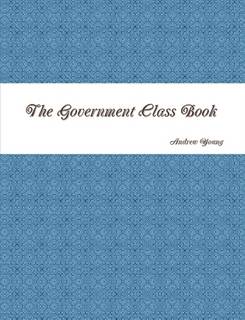
The Government Class Book by Andrew Young was one of the text books used in class rooms throughout America to explain the Constitution. While William Rawles’ A View of the Constitution of the United States of America remains thoroughly a secular law book, Andrew Young explains government at all levels and how they intertwine. His work certainly takes a different view of “the Separation of Church and State.”
This work is also available as a download and can be downloaded by members of Freedom Torch.
Experiments in Government and the Essentials of the Constitution.
$5.95 paperback or $1.50 download.
This classic reprint by Elihu Root touches on the “socialist” movement of the Woodrow Wilson era and explains why government intrusion is not always the answer. He argues that some modification to laws can be necessary without compromising the promise of our forefathers written down in the Constitution of the United States of America.
The Nobel Prize organization said he, “…became one of the most brilliant administrators in American history,…” Why would they say that about him? Because he won the Nobel Peace Prize in 1912 while serving in the United States Senate. He did not receive the award, however, under some pretense that–somehow–destroying the American economy with carbon taxes would–somehow–make the earth a more peaceful place. He got his Nobel Prize the old-fashioned way. He earned it.
Root served as Secretary of War from 1899 to 1904 under Presidents McKinley and progressive Theodore Roosevelt. Roosevelt served as Assistant Secretary of the Navy under Elihu Root. Mr. Root returned to private practice in 1904, but was called upon by Roosevelt in 1905 to assume the duties of the 38th Secretary of State. He served in that role until 1909 when he became a Senator until 1915. He declined another term as Senator and even declined the offer of the Republican party nomination as President.
January sales contest on LULU.com
The January sales contest is on at LULU.com. You can enter READ2011 at checkout to receive 10%* off of your order and help me win a contest.
One of my recommendations is the fictional thriller A Shroud of Evidence. One review states, “This book is intense. So like what it may be like someday. It has a lot of action, suspense and even love. A good read. I recommend it highly. My compliments to the author.” If you have an Amazon, Barnes and Nobles or other online book store account, you can purchase through those sites, but you cannot use the coupon code. 6×9 paperback.
Another pick is Concerning the Militia. This book started out as a research project during the Clinton administration and grew into a reference book. I would guess much of it you already knew or may have seen. Can be purchased in hardcover or paperback through LULU.com only.
The Patriotic Observances Handbook is a guide to the latest patriotic observances and legal Federal Holidays plus a perpetual calendar. This one came about as I searched for information on the LEGAL HOLIDAY National Prayer Day.
2011 Patriot Journal contains some of the information from the Patriotic Observance Handbook. Contains spaces for monthly appointments and journal pages.
My latest work, A Clause for Concern is an examination of the Interstate Commerce Clause of the Constitution by a non-lawyer. Just how far does this Constitutional Power of Congress extend? What of other Constitutional authorities that the Congress has delegated or ignored? I must admit that this one may contain some mistakes, but I reference source material for you to look up.
I also have some reprints of older books such as A View of the Constitution of the United States of America. American Documents Volume II contain the Federalist Papers and American Documents Volume III contain some of the Anti-Federalist Papers. You can see all of the books I have available at my online store.
Please remember, a portion of the proceeds from the sale of these books goes toward buying houses, cars, food, etc.
* Disclaimer: Enter coupon code ‘ READ2011 ‘ during checkout and save 10% off the purchase price. Discount cannot be used to pay for, nor shall be applied to, applicable taxes or shipping and handling charges. Maximum amount that can be applied to discount is $10.00 per account. Promotional codes cannot be applied to any previous orders. No exchanges or substitutions allowed. Only one valid promotional code can be used per order. Offer expires January 31, 2011 at 11:59 PM EDT. Lulu.com reserves the right to change or revoke this offer at any time. Void where prohibited.
Alex Jones interview with Catherine Austin Fitts
A Clause for Concern: Cross Examining the Interstate Commerce Clause
A Clause for Concern: Cross Examining the Interstate Commerce Clause
This is an examination of the Interstate Commerce Clause of the Constitution by a non-lawyer. Just how far does this Constitutional Power of Congress extend? What of other Constitutional authorities that the Congress has delegated or ignored?
The Congress has, for example, turned over control of the wealth of the nation to a cabal of private bankers collectively known as the Federal Reserve. Since 1913 this group has caused the Great Depression and has been directly linked to our current economic turmoil.
Does Congress have the right to order you to purchase health insurance? The Ninth Amendment to the Constitution should destroy that myth.
This is an attempt by a non-lawyer to make sense of it all, but I have dug down into some of the Supreme Court cases and evaluated them next to the Constitution.
Cases Concerning the Intestate Commerce Clause
$15.95
Ships in 3–5 business days
Only ships from the US
This book contains the text of several Supreme Court cases concerning the Interstate Commerce Clause. It derived from my research for an upcoming book entitled “A Clause for Concern, Cross-examining the Interstate Commerce Clause.” It is a scholarly review by a non-lawyer who had little else to do with his time. It will, hopefully, reduce your research time. It is not all-encompassing, but contains what I believe are among the most important to the subject.
2011 Patriot Journal now available.
The 2011 Patriot Journal is now available. It contains much of the same information as the Patriotic Observances Handbook, but includes a monthly calendar, two pages for appointments and journal pages for your thoughts. Few graphics to leave room for your notes.
A guide to the latest patriotic observances and legal Federal Holidays plus a perpetual calendar. Please remember that any graphics in the preview might be in color and they will be in color in the download version. they will be B&W in the print version A work in progress.
A View of the Constitution of the United States of America was written by Williams Rawle, LL.D. in 1829. The Senate writes of Rawle in Senate Document 2807; A report on the Second Amendment by the Senate Judiciary Committee during the 97rd Congress in February of 1982. Senator Orin Hatch wrote of Rawle,
The Jefferson papers in the Library of Congress show that both [St. George] Tucker and Rawle were friends of, and corresponded with, Thomas Jefferson. Their views are those of contemporaries of Jefferson, Madison and others, and are entitled to special weight.
Senator Hatch quoted A View of the Constitution of the United States of America concerning the Second Amendment. Concerning that amendment, Rawle writes
No clause in the Constitution could by a rule of construction be conceived to give to Congress a power to disarm the people. Such a flagitious attempt could only be made under some general pretense by a state legislature. But if in blind pursuit of inordinate power, either should attempt it, this amendment may be appealed to as a restraint on both
I find some inconsistencies in the logic Rawle uses concerning the decision written by Chief Justice Marshall concerning the Interstate Commerce Clause of the Constitution. On the one hand, he notes that it cannot be used to disarm the people; or, in other words, violate the inalienable Second Amendment. On the other, he seems to approve of the Marshall definition as he writes:
These principles are so fully and clearly explained by Chief Justice Marshall in a recent case, that we shall make no apology for inserting a large extract from his opinion.
“Commerce, as the word is used in the Constitution, is a unit, every part of which is indicated by the term.
“If this be the admitted meaning of the word, in its application to foreign nations, it must carry the same meaning throughout the sentence, and remain a unit, unless there be some plain, intelligible cause which alters it.
“The subject to which the power is next applied is to commerce ‘among the several states.’ Commerce among the states cannot stop at the external boundary line of each state, but may be introduced into the interior.
“These words do not, however, comprehend that commerce which is completely internal, which is carried on between man and man in a state, or between different parts of the same state, and which does not extend to, or affect other states.
“Comprehensive as the word ‘among’ is, it may very properly be restricted to that commerce which concerns more states than one. The phrase would probably not have been selected to indicate the completely interior traffic of a state, because it is not an apt phrase for that purpose; and the enumeration of the particular classes of commerce to which the power was to be extended, would not have been made had the intention been to extend the power to every description. The enumeration presupposes something not enumerated; and that something, if we regard the language or the subject of the sentence, must be the exclusively internal commerce of a state. The genius and character of the whole government seem to be, that its action is to be applied to all the external commercial concerns of the nation, and to those internal concerns which affect the states generally; but not to those which are completely within a particular state, which do not affect other states, and with which it is not necessary to interfere for the purpose of executing some of the general powers of the government. The completely internal commerce of a state may be considered as reserved for the state itself.
“But in regulating commerce with foreign nations the power of congress does not stop at the jurisdictional lines of the several states. It would be a very useless power if it did. The commerce of the United States with foreign nations is that of the whole United States. Every district has a right to participate in it. If congress has the power to regulate it, that power must be exercised wherever the subject exists. If it exists within the states, if a foreign voyage may commence or terminate at a port within a state, then the power of congress may be exercised within a state.
“This principle is, if possible, still more clear when applied to commerce ‘among the several states.’ They either join each other, in which case they are separated by a mathematical line; or they are remote from each other, in which case other states lie between them. What is commerce ‘among’ them, and how is it to be conducted? Can a trading expedition between two adjoining states commence and terminate outside of each? And if the trading intercourse be between two states remote from each other, must it not commence in one, terminate in the other, and probably pass through a third? Commerce among the states must, of necessity, be commerce within the states. In the regulation of trade with the Indian tribes, the action of the law, especially when the Constitution was made, was chiefly within a state. The power of congress, then, may be exercised within the territorial jurisdiction of the several states.”
I confess that I have not read the entire work, as yet, so I may be missing something. You will notice, however, that in the recent health care legislation that the Congress now permits health insurance companies to do business across state lines. There is a reason for this. They could not regulate health care and health care insurance if the companies could not conduct interstate commerce. This is a clear act of subversives desiring total government control of the health care industry. It clearly violates the Ninth Amendment to the Constitution of the United States when it demands that you purchase health insurance or be fined. Equally unconstitutional is the requirement for automotive insurance, though one can see that as a more reasonable requirement. You are, after all, responsible for the lives of others when you are on the road.
Government control of any industry was not outlined by the Constitution nor by our capitalistic traditions. The Interstate Commerce Clause was never intended to allow government to control any industry or person directly. And it was never intended as a doorway to repeal the inalienable Bill of Rights.
Rawle covers topics concerning all areas of the Constitution. He covers the enumerated powers of the government and their limitations. He describes why treaties that violate the Constitution or State laws are unconstitutional. In other words, you are allowed to arrest someone who had “diplomatic immunity” for smuggling drugs, reckless driving or raping your daughters. A treaty which limits your right to purchase a certain firearm because another country cannot control its internal affairs is unconstitutional and does not have to be treated as law within a state.
Some of the titles of the chapters are nearly as long as the chapter itself, but covers the topics as necessary. Remember that this man wrote to, and spoke with, the founders on topics of the Constitution and, in turn, shared his knowledge with us. It is well worth reading whether you buy a copy from us for $10.00, or get a free version from Project Gutenberg. There is, also, a version available for download.
The Government Class Book is now available.
Now available!
The Government Class Book, by Andrew Young (1865) is now available for purchase for $12.00 in 8 x 11 paperback. The download is $4.00.
The book is formatted tightly to reduce the number of pages. That is, there is very little margin space for notes. Later editions might add one or two pages for notes depending on the index. Speaking of the index, I added a quick one. I plan to revise it in later editions.
I have not read the entire work yet. However, it appears to go into much more detail concerning citizenship than just the Constitution. It covers many legal terms used and from where they are derived.
As a sample, the first section is entitled Principles of Government. In Chapter Two of that section, Rights and Liberty, defined, we read:
Sec.3. The rights here mentioned are natural rights. They are so called because they are ours by nature or by birth; and they can not be justly taken from us or alienated. Hence they are also called inalienable. We may, however, forfeit them by some offense or crime. If, for example, a man is fined for breaking a law, he loses his right to the money he is obliged to pay. By stealing, he forfeits his liberty, and may be justly imprisoned. By committing murder, he forfeits his right to life, and may be hanged.
You won’t find that in text books at NAU today.
Under the topic of Laws, defined we find:
Sec.7. If, as has been said, the laws of the Creator form a perfect rule of conduct for all mankind, and ought in all cases to be obeyed, then all human law ought to agree with the divine law. If a human law is contrary to the divine law, or if it requires us to disobey the commands of God, it is not binding, and should not be obeyed. So the Scriptures teach. They speak approvingly of men who disobeyed human authority, and who gave as the reason, that it was their duty to obey God rather than men; and they furnish many examples of good men who submitted to severe punishment, even to death, rather than do what they knew to be contrary to the divine will.
Sec.8. But although the divine will as revealed in the Scriptures, is a perfect rule or law for all mankind, and although human laws ought to conform to the divine law, yet it would be impossible to govern the people of a state by that law alone. The divine law is broad, and comprehends rules to teach men their whole duty; but it does not specify every particular act of duty. Much of it consists of general principles to which particular acts must be made to conform. It requires men to deal justly with each other; but men do not always agree as to what is right. Human laws, therefore, become necessary to declare what shall be considered just and right between man and man.
The manual has the distinct advantage of having been written closer to the signing of the Constitution so there was less time to twist the concepts on which the Constitution was founded. The section quoted above describes that our laws are based on the Holy Scripture. It does not dwell on that, however. It simply goes on to describe the rules and definitions of citizenship in a clear language understandable today.
I, also, note that the information is freely available on the Internet. I do not make a “killing” on any classic reprints in my catalog. Only enough to, hopefully, get paid a little for my efforts.
I am waiting, now, on the hard copy of A View of the Constitution of the United States by William Rawle. This is another excellent work on the Constitution written before Harvard turned to the New World Order.
 Beware the ides of March or you might miss a good deal. From now until March 15, you can get 15% off of your order by entering IDES305 in the coupon section for your order. Maximum savings with this offer is $10. This is an offer from LULU.COM which reserves the right to modify or cancel the offer at anytime. Not available where prohibited by law. This book has been known to cause bleeding and convulsions in laboratory liberals.