Booksale at Lulu.

On the 29th, the Supreme Court will hear a case which could affect booksellers using Internet sites such as E-Bay and Amazon. In question is whether or not selling books printed in foreign countries can be sold through these outlets without the permission of the Copyright owner.
The Appeals Court for the 2nd Circuit in New York decided in John Wiley & Sons, Inc. v. Kirtsaeng, 654 F.3d 210, 99 U.S.P.Q.2d 1641, 2011 ILRC 2481 (2d Cir. 2011) that the first sale doctrine of the Copyright law does not include works made overseas. The first sale doctrine in effect since 1908 allows a person to purchase books for resale without limitations imposed by the Copyright owner.
See more at Northern Arizona Gazette
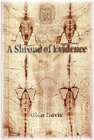
LULU.COM is running a contest which I have entered. You can see details on their facebook page. I get prizes if enough of my book—A Shroud of Evidence–sells, but they plant a tree with my entry.
Of course you can save trees by purchasing the electronic version of my book.
I win because a tree is planted in honor of my book. So I can breath easier.

Enter coupon code SWEET305 at checkout and receive 20% off your order. The maximum savings for this offer is $200. Enter coupon code SALTY305 at checkout and receive 25% off your order of $400 or more. The maximum savings for this offer is $400. These offers are valid in US Dollars, Pounds and Euros and cannot be applied to previous orders. You can only use these codes once per account, and unfortunately you can’t use these coupons in combination with other coupon codes. This great offer expires on February 23, 2012 at 11:59 PM PST, so don’t miss out! While very unlikely, we do reserve the right to change or revoke this offer at anytime, and of course we cannot offer this coupon where it is against the law to do so.
by Glen C. Davis
Recently, the Supreme Court ruled that GPS tracking devises violated the Constitutional Fourth Amendment guarantees because people have a reasonable right to privacy in their cars. As I understand the ruling, however, if you have OnStar® or one of the other government tracking devices already in your car, they can track you through that system.
On January 4th, the Denver Post reported on another example of the courts grappling with the Bill of Rights in the digital age. And the case is shaking up civil liberties groups.
The case involves Ramona Fricosu who was allegedly involved in a fraud scheme along with her husband. One of the items seized by the prosecutors was her laptop computer. The laptop, however, was encrypted and the prosecutor could not retrieve the contents. Fricosu refused to give the password citing her Fifth Amendment right against self-incrimination.
John Ingold of the Denver Post reported on the 24th, “In an order issued Monday, U.S. District Judge Robert Blackburn said requiring Ramona Fricosu to provide an unencrypted version of her laptop’s hard drive to prosecutors does not violate her rights against self-incrimination. Instead, Blackburn ruled that providing the unlocked laptop wouldn’t be self-incriminatory because it wouldn’t prove anything that the government doesn’t already know.”
Hanni Fakhoury, an attorney with the Electronic Frontier Foundation, still thinks the Fifth Amendment applies in this case, according to the article. The case is going to the 10th Circuit Court of Appeals.
This is actually a compelling case and one likely to make it to the Supreme Court. On the one hand, you do have a right not to provide incriminating evidence in the Fifth Amendment. That is why signing anything “under penalty of perjury” is quite frankly unconstitutional. You cannot be compelled to sign away your rights.
On the other hand, the Fourth Amendment guarantees, “The right of the people to be secure in their persons, houses, papers, and effects, against unreasonable searches and seizures shall not be violated,…” While the police today have pretty much the same power that the “Redcoats” had prior to the revolution—which was among the chief complaints of the colonists—they still must obtain a warrant from a judge. In this case, they did that and the seized computer was among the evidence for their case. Whether or not the computer and the location of the computer was specified on the warrant as is REQUIRED by the Fourth Amendment is another topic.
In this case, I would have to agree with District Judge Blackburn. Apparently the laptop was just another piece of evidence in the pieces of evidence that they already had.
Let us set another scenario, however. Let us say that a person is sitting and using a wireless laptop at a coffee shop. A police officer wanders over and the person presses a button and locks the computer. Does the officer have a “probable cause” to order the person to unlock the laptop? No. This would violate both the Fourth and Fifth Amendment. If the officer “sees” something that the person is doing and knows that it is illegal, he may then have probable cause to arrest and cause the person to unlock the computer. He already sees it and knows it is there. If the coffee shop owner, however, sees actual evidence that the person is using the computer for illegal purposes and reports it, then the police have enough for a warrant and to cause the person to unlock.
Granted, in the case of Fricosu, the prosecutors and police have not “seen” the contents so they do not “know” there is anything related to the case on the computer at all. That may be an “out” in this case. Still, I believe there is enough “probable cause” that this does not represent a violation of either the Fourth or Fifth Amendment. Does the lock on your front door, for example, give you a Fifth Amendment right to keep officers from performing their duty after they have complied with the Fourth Amendment?
One question that might come up, however, is what about online storage sites? If a person stores the data at an online site that is not listed on the search warrant, can the police access it or use it as evidence? I would think not until they obtained another warrant for the evidence. Of course, that would be served to the provider of the service, not the defendant.

Looks like a good place to plug my book.
Italian scientists have conducted a series of advanced experiments which, they claim, show that the marks on the shroud – purportedly left by the imprint of Christ’s body – could not possibly have been faked with technology that was available in the medieval period.
The research will be an early Christmas present for shroud believers, but is likely to be greeted with scepticism by those who doubt that the sepia-coloured, 14ft-long cloth dates from Christ’s crucifixion 2,000 years ago.
Sceptics have long claimed that the shroud is a medieval forgery, and radiocarbon testing conducted by laboratories in Oxford, Zurich and Arizona in 1988 appeared to back up the theory, suggesting that it dated from between 1260 and 1390.
But those tests were in turn disputed on the basis that they were skewed by contamination by fibres from cloth that was used to repair the relic when it was damaged by fire in the Middle Ages.
The new study is the latest intriguing piece of a puzzle which has baffled scientists for centuries and spawned an entire industry of research, books and documentaries.
Read more at The Telegraph
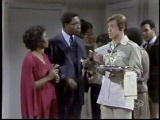
Earlier in the skit, the host announces, “Tonight, we’re on a special mission: due to shifts in the prevailing political climate, minorities are now fleeing the familiar liberal lake wastelands to seek the fertile promised land of the GOP.”
We will leave alone the feelings of George Washington on the spirit of party. You may find that in his farewell address. We will simply deal with the current labels. This article contains enough information to offend everyone. I urge you, however, to continue reading.
Were I to repeat the above Saturday Night Live skit I could equally search for “The Liberal Democrat.”
I have met liberal Democrats on several occasions. With a healthy fear of pain in my facial area, I would not call them liberal Democrats to their face. They call themselves conservative Republicans. This is because everyone has wrapped themselves up in labels so much that they have not taken the time to sit down and think. This is the danger that George Washington expressed in his farewell address.
To be fair to everyone, I should present a quote from a noted liberal of our time.
“It is extremely convenient to have a label for the political and economic viewpoint elaborated in this book. The rightful and proper label is liberalism. Unfortunately, ‘As a supreme, if unintended compliment, the enemies of the system of private enterprise have thought it wise to appropriate its label’,(2) so that liberalism has, in the United States, come to have a very different meaning than it did in the nineteenth century or does today over much of the Continent of Europe.
“As it developed in the late eighteenth and early nineteenth centuries, the intellectual movement that went under the name of liberlism emphasized freedom as the ultimate goal and the individual as the ultimate entity in the society. It supported laissez faire at home as a means of reducing the role of the state in economic affairs and thereby enlarging the role of the individual; it supported free trade abroad as a means of linking the nations of the world together peacefully and democratically. In political matters, it supported the development of representative government and of parliamentary institutions, reduction in the arbitrary power of the state, and protection fo the civil freedoms of individuals.(3)”
That liberal was Milton Friedman; Nobel winning economist. His view was the free market system is the best way to protect the freedoms of the citizens of the United States—as enshrined in the Constitution, particularly the inalienable Bill of Rights. The role of government is not to give a hand out or even a hand up. The idea of governments is only to give everyone a fair shake. Building housing, food stamps and other government programs are a detriment to freedom. Liberals believe in limited government. If you can think of Article I, Section 8 of the Constitution as what the government is limited in doing, not what gives them their powers, then you are beginning to think like a liberal.
This is not a new concept. Many of our founding fathers were liberal democrats. Today, that term has been twisted into Constitutional Republican to differentiate them from liberal democrat. This process is called “New Speak.” This concept was conceived by George Orwell in his book 1984 written in 1948(4), It is said that Orwell was a “socialist” who even fought in the civil war in Spain. He became disgusted with the concept after news of Stalin’s purges leaked to the west. New Speak is the changing of words into more “politically correct” versions. One definition that you can find on the web—or, probably, in your printed dictionary—is “favorable to progress or reform, as in political or religious affairs.”(5) This is the basic definition used today.
Progressive is another label that has become synonymous with liberal. This brings up another concept from 1984 called “doublethink.” This is the ability to hold two diametrically opposing views while believing both to be correct. The “progressive” decries that liberal democrats want to “take us back to the horse and buggy days,” while believing that we must get rid of the internal combustion engine because Al Gore says that there is a phenomenon happening called global warming. George Bush declared, after 911, that citizens should not change their basic way of life while getting a PATRIOT act pushed into law a month later.
Perhaps a discussion on democracy is in order. You may not be familiar with these concepts and progressives, today, will definitely keep their kids from reading this article.
Democracy in its purist form was practiced by ancient Greece. In Greek democracy, certain members of a city had a vote. It was not universal suffrage, as believed, but most of the free members of the society had a vote. These votes were only valid to the city in which the vote was taken. What happened in Athens stayed in Athens. Greece consisted of city-states; a form of confederacy. Much like the United States under the Articles of Confederation.
There is another form of government called “democracy” that has infiltrated the United States in the form of unconstitutional initiatives and referendums. An example of this form of democracy is the fact that 26% of Arizona voters voted to raise the State sales tax 1%. I cannot prove it, of course, but I suspect that a majority of those voters were union members which were to benefit from this raise in the sales tax. Unions are not a part of “Greek democracy,” but an institution of the other formed called “democracy,” of which we we review presently. As I recall, some number of these voters lost their job anyway some months after the raise had been approved. A more fair form of this democracy would be if 51% of registered voters were required to approved an initiative or referendum.
Elihu Root wrote in his 1913 lecture Experiments in Government concerning the Initiative and Compulsory Referendum—as well as Recall of Officers and Popular Review of Judicial Decisions, “Some of these methods have been made a part of the constitutional system of a considerable number of our states. They have been accompanied invariably by provisions for very short and easy changes of state constitutions, and, so long as they are confined to the particular states which have chosen to adopt them, they may be regarded as experiments which we may watch with interest, whatever may be our opinions as to the outcome, and with the expectation that if they do not work well they also will be abandoned.”
As we saw from the proceeding paragraphs, it has not worked well. The Arizona Constitution has been so muddled up with special interest programs costing the taxpayers more and more each year. The second pair of processes mentioned by Mr. Root are constitutional. They are not “written” in the Constitution, but have existed as part of our culture and tradition which is a part of our Constitution. Initiatives and referendums ignore the sage advise of William Rawle in his A View of the Constitution of the United States of America. “A good constitution is better understood and more highly valued, the longer it continues. Frequent changes tend to unsettle public opinion, and in proportion to the facility with which they are made, is the temptation to make them.”
The democracy that our “founding fathers” spoke of was a different kind. This form was written of by many people. The works of John Locke seem to have taken on particular significance. So much so that the preamble to the Declaration of Independence that Thomas Jefferson wrote was taken from the works of John Locke. The form of “democracy” that became part of the culture of the United States was republican in nature. Under the Articles of Confederation, each State was a Republic. The second article of that document read, “Each state retains its sovereignty, freedom, and independence, and every Power, Jurisdiction, and right, which is not by this confederation expressly delegated to the United States, in Congress assembled.” Englishman John Locke dealt with a parliamentary system of government which is the same basic structure enshrined in the Constitution giving limited and divided powers to the government; i.e., executive, legislative and judicial branches. The only input from the citizens in the original practice of the government under the Constitution was the election of the State legislature. If people disagreed with the laws that they made or the Senators and Representatives they appointed to Congress, they could express their displeasure by simply voting them out of office.
The Republican form of government was so revered that its virtues were touted continuously by both Federalist and Anti-Federalists. The Anti-Federalists feared that the new Constitution would represent the loss of the republican form of government and States’ Rights while the Federalists proved their devotion by citing Article IV, Section 4 of the Constitution of the United States.
As for States’ Rights, the Federalist Cassius wrote, “Can, then, those murmuring sycophants, who oppose the plan of federal government, wish for anything more liberal than what is contained in the aforementioned section? If the powers of a federal head were to be established on as weak a frame as that on which the present confederation is founded, what effect would any constitution have in giving energy to measures designed to promote the glory of the Union, and for establishing its honour and credit? One great object of the federal Convention was, to give more power to future Assemblies of the States. In this they have done liberally, without partiallity to the interests of the states individually; and their intentions were known before the honourable body was dissolved.”
So do “liberal democrats” of today practice this kind of democracy? Does so-called socialism protect the free market system by limiting government intervention? Just what form of democracy do they preach?
The liberals believe in allodial title to land. That is, full and clear title that may be given, sold and otherwise transferred as they please.
“TO understand political power right, and derive it from its original, we must consider, what state all men are naturally in, and that is, a state of perfect freedom to order their actions, and dispose of their possessions and persons, as they think fit, within the bounds of the law of nature, without asking leave, or depending upon the will of any other man.”—John Locke, Two Treatises on Government, Volume II, Chapter II, Of the State of Nature.
What do “liberals” of today think? Abolition of property in land and application of all rents of land to public purposes [property taxes].
The liberals believe that direct taxes [such as income tax] must be equally proportioned to the population.
No Capitation, or other direct, Tax shall be laid, unless in Proportion to the Census or Enumeration herinbefore directed to be taken.—Article I, Section 9, Clause 4 of the Constitution of the United States of America
The “liberals” of today changed that with the Sixteenth Amendment. “The Congress shall have power to lay and collect taxes on incomes, from whatever source derived, without apportionment among the several States, and without regard to any census or enumeration.” This way they could institute A heavy and graduated income tax.
The liberals believe that the government should, “…coin money and regulate the value thereof.” The “liberals” of today believe in Centralisation of credit in the hands of the State, by means of a national bank with State capitol and an exclusive monopoly.
The “liberals” of today believe in Centralisation of the means of communication and transport in the hands of the State, Extension of factories and instruments of production owned by the State; the bringing into cultivation of waste-lands, and the improvement of the soil generally in accordance with a common plan.
I could go on ad nausem. Where did the “liberal of today” find all of this in the works of John Locke? Don’t look. You won’t find it there. You will find it in the Manifesto of the Communist Party, the English edition of 1888.
You see the liberal democrat believes in the free market system with very little impediment by the federal government. Indeed, even from the State government; though States have the right, under the Constitution, to control the industry and labor within its borders. Congress ONLY has the right to ensure that products are transported from one State are transfered to another without interference. They are supposed to make sure that illegal items are not brought in or exported. Something like—I don’t know—guns sent to Mexico. The free market system is described by Adam Smith in a work he published about the time we began the War of Independence called An Inquiry into the Nature and Causes of the Wealth of Nations (PDF here). We have since come to call it Capitalism. This is the form of economic system which Michael Moore uses to make as much money as he can so that he can rail about the system that he uses to increase his gain. Remember doublethink?
So how does the Communist feel about the free market system? “It has resolved personal worth into exchange value, and in place of the numberless and feasible chartered freedoms, has set up that single, unconscionable freedom—Free Trade.”
Marx, in this work, goes on to say, “The bourgeoisie has stripped of its halo every occupation hitherto honoured and looked up to with reverent awe. It has converted the physician, the lawyer, the priest, the poet, the man of science, into its paid wage labourers.”
Interesting, isn’t it? Today the physician is converted to a “paid wage labourer” by the Patient’s Affordable Health Care act. The Lawyer is oft times forbidden to bring up the Constitution in the court room. There were several sick attempts by priests to combine Communism with religion (It’s all right, in the “liberal” mind of today, if you combine Church and State this way). It continues from the pulpits today giving us unconstitutional hate crimes legislation. As for the poet? “Literature must become party literature. Down with unpartisan litterateurs! Down with the superman of literature! Literature must become a part of the general cause of the proletariat,” says Vladimer Lenin. The man of science may only “get paid” from the National Science Foundation for research intent on proving that monkeys made man and global warming will destroy the earth any day now. Honest. Forget those emails.
The, so-called, Interstate Commerce Clause is used to institute much of this government regulation. It was, basically, this commerce clause that was used to declare blacks as property in the Dred Scott v. Sandford, 60 U.S. 393 (1857) case. “Now, the following are truths which a knowledge of the history of the world, and particularly of that of our own country, compels us to know—that the African negro race never have been acknowledged as belonging to the family of nations; that as amongst them there never has been known or recognised by the inhabitants of other countries anything partaking of the character of nationality, or civil or political polity; that this race has been by all the nations of Europe regarded as subjects of capture or purchase; as subjects of commerce or traffic; and that the introduction of that race into every section of this country was not as members of civil or political society, but as slaves, as property in the strictest sense of the term.” It was, of course, Southern Democrats who raised this proposition and apparently it has remained in the conscience of the democrat of today. We see, again, the progressives rolling back the clock.
Perhaps the difference in our concepts come from these facts. The Wealth of Nations is such a large book with hundreds of pages with specific examples. Very difficult to read since the illiteracy level continues to rise in our “Free education for all children in public schools.” The Manifesto of the Communist Party is short and full of generalized “soundbites” more suitable to IPhone aps. You can even make actual soundbites with rap accompaniment. Something like, “You can’t get no money from you dad, Bein’ slaves to the government ain’t so bad. Da got da money!,” or whatever.
I think, now, you can detect easily when “liberal democrats” of today are lying. Their lips are moving to form the words, “I’m a liberal.” What they really mean is that they are a Communist.
I have published two white papers on an Arizona State Guard at the Constitutional Republic Party web site. They are PDFs requiring Adobe Reader. I am working on more.

For those who like the smell of paper in the morning, our recent Treatises on Warfare contains a collection of documents from various eras of warfare. Concerning the Militia is still available and contains a wealth of information on the Second Amendment to the Constitution of the United States.
We have recently added Essays on the Constitution of the United States by Paul Leicester Ford with additional material and editing by Glen C. Davis. The “government approved” Federalist Papers were not the final word on the subject. See what some of the other Federalists and Anti-Federalists had to say about this document and the Bill of Rights. This book comes in regular print and a large print edition.
The fictional suspense novel A Shroud of Evidence is also still available. It is now available at the iBookstore for your electronic device.
So take your pick and save up to $50 until December 14th.

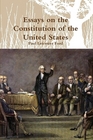 Essays on the Constitution of the United States
Purchase Essays on the Constitution of the United States with 15% off of the cover price of $15.95 with coupon code AUGUST305.
6×9 Paperback
8×10 Large Print Edition
Check out all of my titles!
Offer ends September 15, 2011.
Disclaimer: Use coupon code AUGUST305 at checkout and receive 15% off Essays on the Constitution of the United States. Maximum savings with this promotion is $100. You can only use the code once per account, and you can’t use this coupon in combination with other coupon codes. This great offer ends on September 15, 2011 at 11:59 PM so try not to procrastinate! While very unlikely we do reserve the right to change or revoke this offer at anytime, and of course we cannot offer this coupon where it is against the law to do so. Finally, Lulu incurs the cost of this discount, so it does not impact the Author’s proceeds of the book.