My day with Luca Zanna
 Here is my interview conducted by Luca Zanna of Love, Guns and Freedom on KTOX radio. I am in the second hour.
Here is my interview conducted by Luca Zanna of Love, Guns and Freedom on KTOX radio. I am in the second hour.
NOTE: Sony, Microsoft, Windows, Dragon NaturallySpeaking and Olympus are all registered trademarks.
UPDATED: 4/7/2015; 9:38
I realize that I have written nothing on this blog for eight updates and ten spam comments. Thought I’d better post something. So I decided to review a recent purchase.
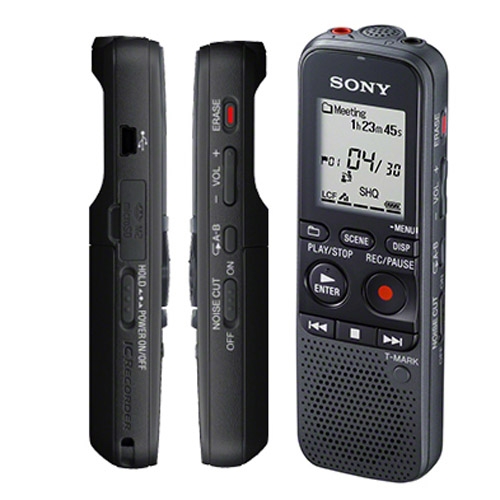 I recently purchased a Sony ICD-PX333 recorder from Wal-Mart. I cannot find the receipt, but I believe it was around $65. That was not what I set out to do, but the model I went back to purchase was sold out.
I needed to replace an Olympus VN-7100 that I found in a local thrift store. I have been writing mostly news, lately. But I wanted to be prepared when that great American novel popped into my head. My Olympus still works and I can use it for some things. I needed something, however, that had a more clear sound for dictating. The older Olympus does not have a computer port, but I can connect it through the headset with a minijack plug and record the information that way.
As an aside, I did give my Olympus a torture test. I did not intend to. But when I removed some clothes from the washing machine, I found it inside. After making sure it thoroughly dried out, I tested it and found it still worked just fine. I would not recommend this test on any device on purpose.
There were two Sony models on display. I do not recall the other, but I chose the PX333 because it had more recording time built in and had a port for a mini-SD card. The other model did not—as far as I could tell.
One of the complaints I read concerning this model is that the SD card was not included. You can get an 8-GB SD card for about $11 at Family Dollar (if they are in stock). That is double the internal memory which is just under 4-GB due because some of the internal memory is used for file management. Wal-Mart had a 32-GB SD card for about $17. With over 1000-hours of recording time, however, this is hardly an issue. If you plan to attend a week-long seminar, of some sort, or recording the speech of a politician, a mini-SD card might be a good idea.
I immediately opened the box and found inside two AAA batteries, a USB plug and the PX333, of course. What I was disappointed in NOT finding was a carrying case and a DVD-ROM with Dragon NaturallySpeaking. I did not really expect to find a microphone or headphones even though they were on the list. There was an asterisk beside these items and that means I did not buy the higher priced model. Apparently these Items come with the PX333F model. In fact there were no disks and that was somewhat of a disappointment. Until I realized that the software may have been included on the device itself.
It took a little playing around to figure out how to move around the menu to set the time and date and figure out how to set up other things for the device (Who needs instructions?).
When I got it home, I plugged it in with the USB plug. I had already made a few test recordings to play with. I was pleased to find that Sony had added a software called Sound Organizer on the device and I installed it. It did give me some weird errors but continued to install okay. There was an update to the software already available, and it, too, gave me an error, but updated okay.
The one bad thing about the software—at least for Mac enthusiasts—is that the Sound Organizer software is available only for Windows. You can still access the PX333 from Mac or Windows like any other MP3 device when attached by the USB cord.
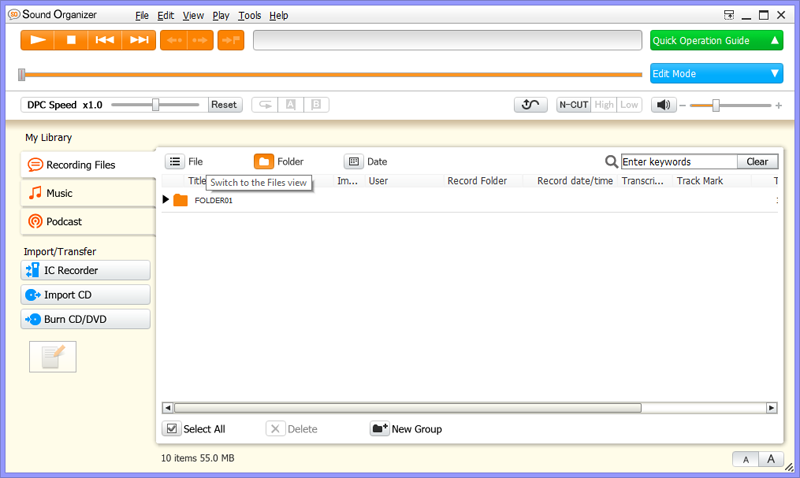 The nice thing is that when there is a new recording on the device, the Sound Organizer, or SO, recognized that immediately and asked if I want to transfer the new files. Right away I did. As a habit I turn off devices before I plug them into the computer. Once it recognizes it, it will turn it on for you.
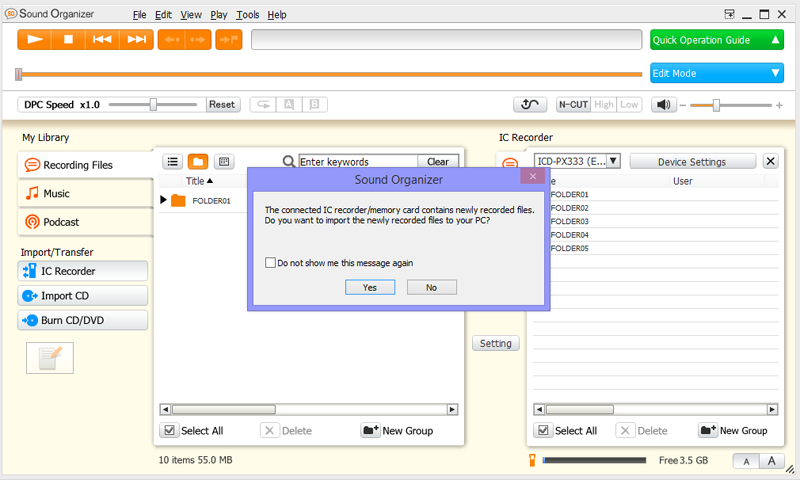 You will notice that when you plug in the recorder, you will get a menu for both the library on your computer and the IC Recorder. You can erase the files on your recorder or transfer back and forth. This is why the SD card is really a moot point. You can transfer recorded files back-and-forth to any device you desire and even burn them to CD or DVD.
With the device plugged in, you can do many things. You can make new folders on your device. By pressing the DEVICE SETTINGS button, you can access all of the menu items instead of fumbling with the MENU button on the device. It also accesses the date and time through your computer and automatically sets it. The PX333 does not display the time and date on the device which is kind of disappointing.
Interestingly, you can also add music and podcast to your device which might be useful if you have a stereo headset. This takes from your recording time, of course. If you are in the habit of waiting around for interviews, though, this might be nice.
The SO software allows you to edit the files so that you can save distinct quotes. You can burn them to a CD or DVD which might be very useful for a radio news host. If you can plug in the device at the station, you can probably even run the quotes off of the device without having to waste a CD or DVD.
One review complained that the device can only record in MP3. I am not sure of the advantage of any other format except, perhaps, that it might extend the recording time. MP3 is a standard and almost all other software recognizes it. I find that makes it easier to add audio from the PX333 into my video editing software.
The one function I was really excited about was the little “notepad” icon all the way to the left and to the bottom. It is highlighted when you have a file selected. That is the transcription icon. I pressed it and hoped that it would transcribe the audio into an editable document. It did not. All it did was set up a page with the information about the file and I had to type in the quotes.
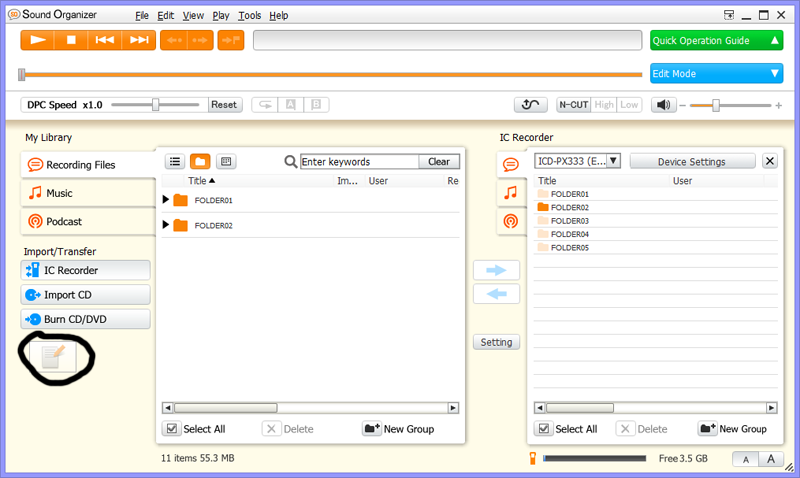
Apparently this feature is meant to work with the Dragon NaturallySpeaking program; not provided with this model. I have tried to get it to work with the speech recognition software on Windows 8.1, but with no success. If I figure out how to do it, I will let you know. The SO does provide support for Dragon, so I presume it will work if you have a copy to install.
Another disappointment of this feature is file naming. If you go to transcribe a file, the name of the recorded file is automatically entered as the document file name. This is all right. If you go to create a second file—for whatever purpose—it keeps the recorded file name and does not let you change it. This is a minor inconvenience. You just have to remember to change the file name the first time you transcribe each document.
You can use the DPC Speed to adjust the speed of the speech to match your typing skills.
The other feature I am happy with is the T-MARK button. As you record, you can use this to “flag” certain segments. Say, for example, you are doing an interview. You can press T-MARK before each question and you can then go straight to specific questions that you decide to use in the interview.
Even without the “goodies” provided in the higher-end models, I have to say that I am okay with the purchase, overall. I still have not gone through all of the functionality of the device, so I do not know what I am missing. If I find any really neat stuff, I’ll let you know.

Notebook designed to help you get the most out of sermons or Bible study.
I have just created My Bible Study Notebook. This idea sprung from a notebook of sermons that I was keeping. I realized that I could create a notebook with space for various aspects of a Biblical topic whether from a sermon, Bible study class or my own private study. You can click HERE for a preview of the inside of the notebook.
The notebook is designed for a right-handed person. If you go to Page 10 of the preview (Page 6 in the actual print version), you will see the beginning of the section. This page has a section in which you can write scriptural references from the sermon or Bible study and a section for your own private notes.
Opposite the page on Page 9 of the preview is a section in which you can place a quote you like from the sermon. You can also add words or terms that you decide need more study. You can add definitions from Strong’s Exhaustive Concordance or your favorite Bible dictionary.
When you get home, you go to Page 1 of the printed book (Page 5 on the preview) where you have space to start writing the sermon scriptures. If the sermon contains quite a few scripture references (as tends to happen at the Church I attend), you can add only what you consider the most important. Do not fear adding scriptures that you feel that you want to remember on the topic.
That is the manner in which each section is laid out. At the front of the book is an index with each beginning page of each section already printed for you. You simply provide the title of the sermon from that section.
There are a few important quotes to review which explains why it is important that you study. It is important that YOU know what the Bible says. Your salvation depends on what you KNOW; not what you are TOLD.
By HILLEL ITALIE
AP National Writer
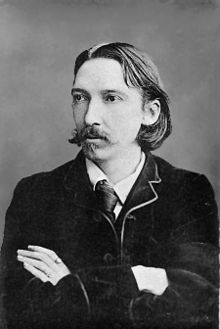 NEW YORK—–Robert Louis Stevenson is the author of “Treasure Island” and “The Strange Case of Dr. Jekyll and Mr. Hyde,” some of the most thrilling stories in literary history. But in a newly discovered essay, he says he was often bored by the fiction of his day.
“In the trash that I have no doubt you generally read, a vast number of people will probably get shot and stabbed and drowned; and you have only a very slight excitement for your money,” Stevenson wrote.
“But if you want to know what a murder really is – to have a murder brought right home to you – you must read of one in the writings of a great writer. Read `Macbeth,’ for example, or still better, get someone to read it aloud to you; and I think I can promise you what people call a `sensation.'”
Robert Louis Stevenson also published a book entitled Essays in the Art of Writing in 1905 covering the technical aspect of writing. He is also known for A Child’s Garden of Verses. The prolific author also wrote many other non-fiction works such as In the South Seas written during the declining period of his life.
Stevenson’s criticisms appear in a brief, long-lost essay published Friday in The Strand Magazine, a quarterly based in Birmingham, Mich. that has published obscure texts by Mark Twain, Graham Greene and other famous authors.
Apparently part of a larger work, the piece is titled “Books and Reading. No 2. How books have to be written.” The Strand managing editor Andrew Gulli said that essay “No. 1” was auctioned off in 1914, 20 years after the author’s death, and never seen again. No. 2 turned up recently at a location very far from Stevenson’s native Scotland – the library at Syracuse University.
“There are several guesses as to who it was meant for and why it was not published,” Gulli said during a recent interview. “One guess is that it was sent to his stepson Sam or it could have been prepared for a young adult magazine called Young Folks but it was never published in that magazine.”
Source: AZFamily
In you are in Shelbyville, Kentucky on March 21-23, you can the Western Hills High School production of “The Strange Case of Dr. Jekyll and Mr. Hyde” in the school auditorium.
A Robert Louis Stevenson controversy was raised in England in February where multimillionaire Debbie Dove took heat for plans to dig up a garden once owned by Stevenson to install an underground spa for her daughters in London.
LULU.COM is running a contest which I have entered. You can see details on their facebook page. I get prizes if enough of my book—A Shroud of Evidence–sells, but they plant a tree with my entry.
Of course you can save trees by purchasing the electronic version of my book.
I win because a tree is planted in honor of my book. So I can breath easier.
Look for my upcoming article in Survivalist Magazine concerning the militia. I am told it will be in Survivalist Magazine #8.
I have published two white papers on an Arizona State Guard at the Constitutional Republic Party web site. They are PDFs requiring Adobe Reader. I am working on more.

For those who like the smell of paper in the morning, our recent Treatises on Warfare contains a collection of documents from various eras of warfare. Concerning the Militia is still available and contains a wealth of information on the Second Amendment to the Constitution of the United States.
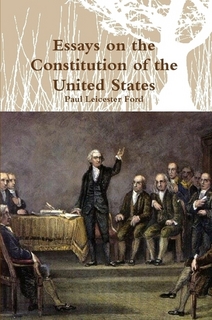
We have recently added Essays on the Constitution of the United States by Paul Leicester Ford with additional material and editing by Glen C. Davis. The “government approved” Federalist Papers were not the final word on the subject. See what some of the other Federalists and Anti-Federalists had to say about this document and the Bill of Rights. This book comes in regular print and a large print edition.
The fictional suspense novel A Shroud of Evidence is also still available. It is now available at the iBookstore for your electronic device.
So take your pick and save up to $50 until December 14th.
Now available
The States were used to autonomy. Many were so satisfied with this arrangement that the preferred to remain under the Articles of Confederation. There were many opponents to the new Constitution of the United States known as Anti-Federalists.
The Federalists were those in favor of the new Constitution and its “limited” form of government. They never anticipated their posterity twisting of the words of the Constitution to eliminate the freedoms they had fought for.
But the Anti-Federalists did. “It might be here shewn, that the power in the federal legislative, to raise and support armies at pleasure, as well in peace as in war, and their controul over the militia, tend, not only to a consolidation of the government, but the destruction of liberty,” a writer who wrote as Brutus complained.
Essays on the Constitution was edited by Paul Leicester Ford and published in 1842. It is an intriguing look at the arguments in the newspapers of the time on the subject.
It seems that Rhode Island was not favored among the several States. Mr. Ford added a letter from a writer for Rhode Island.
I edited the work further giving it a new index and adding the works of Brutus which were referred to in the original work, but never added. I added, also, the objections by Elbridge Gerry, Patrick Henry and Colonel George Mason—All of which refused to sign the Constitution.
This book is an interesting view of the battle for ratification of the Constitution and a good read for anyone studying the history of the United States from those who lived it.
SEE ALSO: Anti-federalist are “Political Jesuits” under Satanick influence

Order any of my books from now until April 30 and receive the shipping of a single book free up to $4.99.
Use coupon code APRILMAIL305 at checkout, select Mail Shipping and receive the single book shipping cost free. Maximum savings with this promotion is $4.99. Print and tax amounts are excluded. You can only use the code once per account, and you can’t use this coupon in combination with other coupon codes. This great offer ends on April 30, 2011 at 11:59 PM so try not to procrastinate! While very unlikely we do reserve the right to change or revoke this offer at anytime, and of course we cannot offer this coupon where it is against the law to do so. Transaction must be in US dollars.